Tag Archives: Pauillac

2016 Château Lafite Rothschild

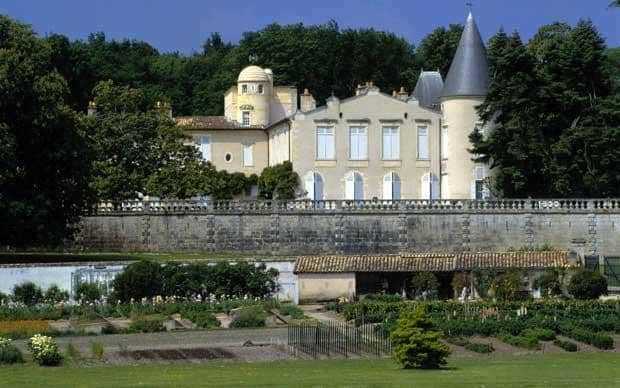
Lafite Rothschild

2016 Duhart Milon (67% Cabernet Sauvignon, 33% Merlot)
They always serve 4th growth Durhart Milon before the second wine of Lafite. Does that mean that it is less serious? No, but it is definitely lighter in body. The nose of the 2016 is soft, ethereal, reserved, and aristocratic with telltale pencil shaving aromas. The wine starts out with a very smooth, caressing mouth feel and goes on to show refined understated fruit. It is more elegant than powerful, and lacks richness. Medium-long fresh aftertaste with plush textured tannin.

2016 Carruades de Lafite (49% Merlot, 44% Cabernet Sauvignon, 5% Cabernet Franc, 2% Petit Verdot)
The nose is a little disappointing here, with some astonishing asparagus and bamboo shoot/Chinese vegetable notes! These dissipate somewhat with aeration, but the bouquet is not flattering at this stage. The wine is much better on the palate and fills out with a classy satiny texture and medium body. There is clearly good acidity on the finish, so it will undoubtedly age well, but will always remain on the delicate side.

2016 Lafite Rothschild (92% Cabernet Sauvignon, 8% Merlot)
Lovely trademark Lafite nose words cannot aptly describe. Suffice it to say that it is deep and subtle with an unmistakable violet element as well as muted graphite and coffee aromas. The wine has a gorgeous texture on the palate with the guts to back up the tremendous elegance. The aftertaste is deliciously long and aromatic. Check back in 2050! This Lafite proves that the best wines of the vintage, thanks to a streak of lively fresh acidity, have what it takes to age, as well as a unique balance between fruit, tannin, and acidity. This Lafite was one of the best wines I tasted all week. It’s nice not to be disappointed!

2016 Château Mouton Rothschild


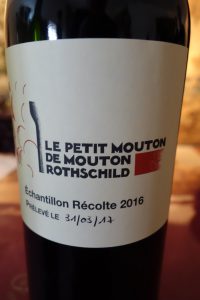
Le Petit Mouton (64% Cabernet Sauvignon, 35% Merlot, and 3% Cabernet Franc)
Rich nose very typical of fine Pauillac. Classy “inky” and deep cassis aromas.
Starts out surprisingly soft on the palate, then changes pace to reveal the finest imaginable sort of acidity. Springwater-type purity with tertiary (already) red and black fruit. Interesting textured aftertaste. Lovely very long finish. A superb second wine.

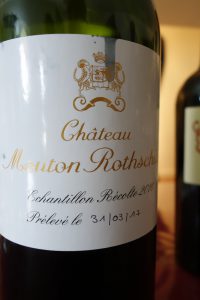
Château Mouton Rothschild (84% Cabernet Sauvignon, 13% Merlot, and 3% Petit Verdot)
The bouquet is undefined and obviously too young. It is nevertheless ethereal, and promising. The wine is fresh, big, and sinewy on the palate with great blackcurrant flavors. Both tannin and fresh acidity – the hallmark of the 2016 vintage – spread out over the palate, working into a long, classic aftertaste with a velvety texture and cedar overtones. Bit dry on the finish. Mouton can be uneven, but this one is a real winner. It is a virile wine, on the massive side. Revisit a few decades from now.

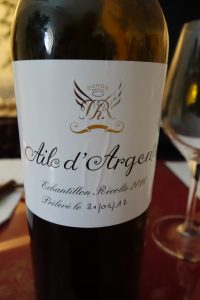
Aile d’Argent (Bordeaux blanc) (53% Sauvignon Blanc, 46% Sémillon, and 1% Muscadelle)
Medium gold color. Showing a good aromatic equilibrium between grape varieties as well as some spearmint overtones and a certain waxiness. The wine is full-bodied on the palate and seems ever so slightly sweet (although it may not be). Medium body and some minerality on the finish. A good wine, but not in the same league as the reds.

2016 Château Latour

Château Latour stopped selling on a futures basis beginning with the 2012 vintage. They nevertheless invite professionals to taste the new vintage every year just like all the other châteaux. In addition, they pour older wines that have been released on the market on this occasion.

DSC03069

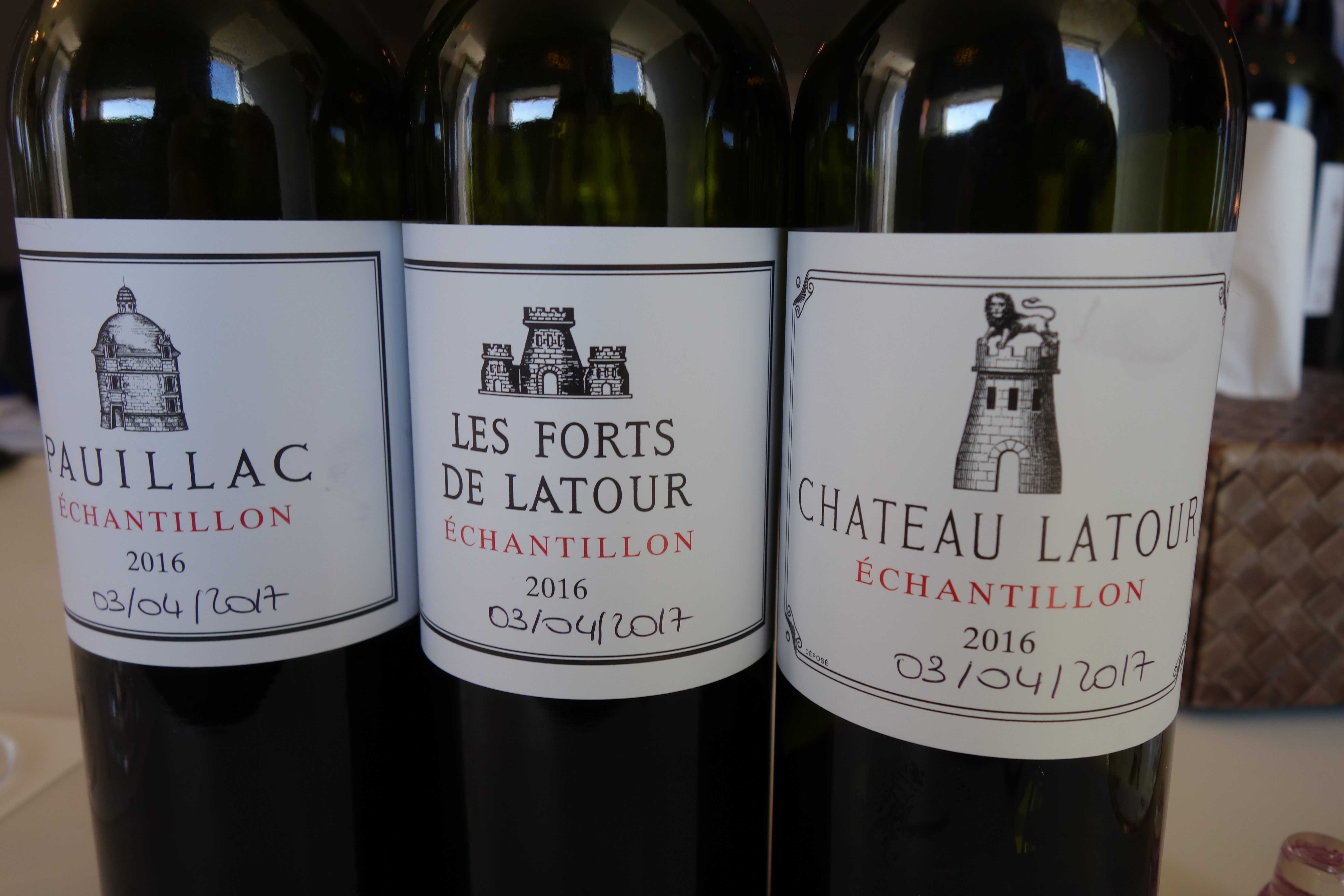
2016 Pauillac (54.6% Cabernet Sauvignon, 38.9% Merlot, and 6.5% Petit Verdot): I must admit to once again being very taken with the Latour’s third wine. Even if rather subdued at present, it shows ripe, sweet, plummy, blackurrant preserves on the nose and reflects its terroir – a sort of apotheosis of Cabernet Sauvignon, even at this level and despite the much lower percentage of that variety in the final blend compared to the grand vin. It may be a tad weak on the middle palate and does not have quite the breadth of the latter, but is a very good wine.

2016 Les Forts de Latour (64.3% Cabernet Sauvignon, 35.3% Merlot, 0.4% Cabernet Franc)
This is unsurprisingly one step up from the Pauillac AOC. It has a nice, fresh, promising nose with a slight, not unpleasant herbaceousness, as well as a meaty quality. The wine is big and spherical on the palate and spreads out with considerable richness. Les Forts displays the 2016 sweetness along with decent grip, great acidity, and a dry mineral aftertaste. The finish is layered and velvety.

2016 Château Latour (92.9% Cabernet Sauvigon, 7.1% Merlot) – The bouquet is at the same time seductive and aristocratic, with violet overtones. Divine.
To say the least, the wine has good structure on the palate. Very much the “iron fist in a velvet glove”. Big and develops with self-assurance and grace. The tannins coat the teeth and the aftertaste goes on and on. If this is a monster, it is a very well-behaved one… Superb potential.
The three 2016s were followed by same three wines from older vintages that are in bottle and out on the market:

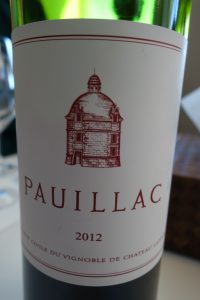
2012 Pauillac (43.9% Cabernet Sauvignon, 54.5% Merlot, and 1.6% Petit Verdot)
This wine looks older than its years and the rim is just starting to brown.
It already has a nose of lovely aged claret with a trace of cocoa. There is also a definite greenness, the effect of a late-ripening year, but it fits in somehow. The wine is somewhat thin and angular on the palate, but the Latour style is definitely there. Austere. A Bordeaux for Bordeaux lovers. Others might be put off. Relatively long aftertaste, once again mineral.

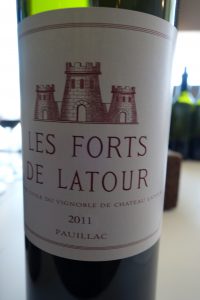
2011 Les Forts de Latour (61.5% Cabernet Sauvignon, 35%% Merlot, 0.5% Cabernet Franc, and 3% Petit Verdot)
Very deep youthful color with an uplifting bouquet of red fruit, menthol, and graphite. Already quite expressive at this age. The wine starts off round and attractive on the palate, then dips somewhat before coming back with a deep mineral aftertaste. There is a slightly dilute quality to the wine, but this is redeemed by the forceful aftertaste, which is very dry. Not the greatest balance, but bears the unmistakable stamp of Latour’s terroir.
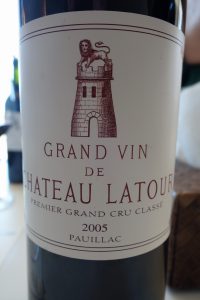
2005 Château Latour (87% Cabernet Sauvignon, 12% Merlot, 0.5% Cabernet Franc, and 0.5% Petit Verdot)
This looks perhaps five years little older than its age (twelve years). The nose is redolent of luscious ripe fruit with captivating earthy nuances, accompanied by notes of pencil shavings typical of this estate as well as other Pauillacs. This graphite quality comes through on the palate as well. The taste is thirst quenching and follows through flawlessly with liquorice, blackcurrant, and wildberry flavors. There is a beautiful silky texture that leads into a majestic aftertaste with extremely fine-grained tannin and candied black fruit nuances. Last year, the 2000 Latour was poured and everyone was surprised how ready to drink it was. This 2005 is another kettle of fish. Give it another 10 years at least to make the most of it. Très grand vin.

Extensive tasting of second wines


20151004_184214


I had never before attended a tasting of second wines as such, i.e. nothing but second wines, so I was very interested to do so on Saturday the 26th of September in Bordeaux.
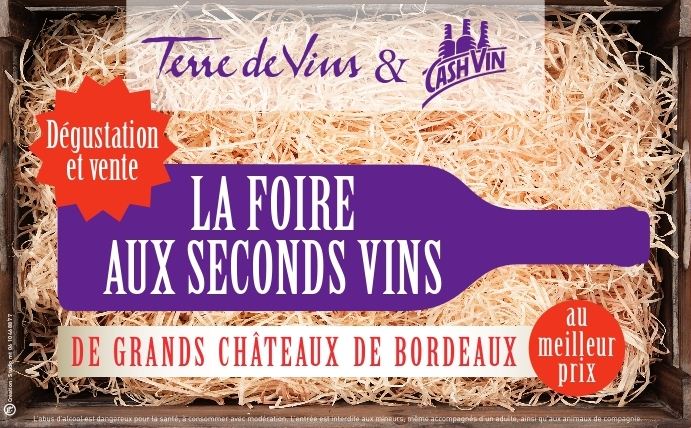
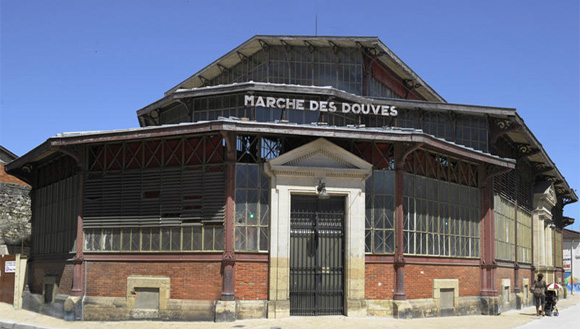
This event was organized by Terre des Vins magazine, part of the Sud-Ouest media group and Cash Vin (http://www.cash-vin.com/), a wine merchant, in the newly renovated Marché des Douves next to the Capucins market.
Second wines are widely perceived to be a mixed bag and the sort of wine lover who thinks Bordeaux is limited to the great growths is likely to snub anything “less than the best”.
However, this reasoning only goes so far…
In fact, the history of second wines goes back a very long way. There are records of such wines in the 18th century, and their increased number in recent years has gone hand in hand with improved quality starting in the 1970s. In fact, most classified growths have a second wine nowadays.
The principle is quite simple: the grand vin, the estate’s flagship wine, can be improved by selecting only the best vats. The remaining wine is less good, but also less expensive and usually ready to drink earlier. For consumers, second wines are worthwhile to the extent that their quality does not lag too far behind that of the grand vin and that they cost significantly less.
They are also ideally suited to restaurant wine lists.
The selection process includes a variety of parameters. In difficult years, the proportion of second wine is generally much higher and, in extreme cases, can totally replace the grand vin. Also, vats from specific plots not quite up to the standard of the main label are put into the second wine, as are wines from young vines.

Then there is the issue of second wines that refuse to admit they are second wines… Examples that spring to mind are Forts de Latour and Clos du Marquis, but there are many others. Their owners claim that these come from a specific part of the vineyard and do not incorporate less good vats from the best part. They therefore must be seen as “estates within an estate”. I don’t find this explanation very convincing and despite the hype still consider them second wines. What else do you want to call them? Furthermore, Latour and Léoville Las Cases even produce third wines, respectively le Pauillac de Château Latour and Le Petit Lion. Château Palmer’s Alter Ego, is not presented as a second wine either, but this just boils down to semantic differences.
Created in 1930, Mouton Cadet was originally the second wine of Château Mouton Rothschild. Over the years, it has become a branded AOC Bordeaux négociant wine.
French for second wine is second vin rather than deuxième vin. The reason for this is that when there is a series of just two things, the word second is used. As soon as there are three or more things, deuxième replaces second.

Here are my impressions of the 21 wines – all red – I tasted.
C = color
N = nose
T = taste
Please note that the scores are out of 20 and that I am a tough grader.

The retail prices are in euros per bottle including sales tax (VAT).
The purchase of 6 or more bottles entailed a discount of approximately 10-15%.

Conclusion / bottom line: Like any tasting, this is a mixed bag, so generalizations are difficult. However, the best wines were well worth the money, and some were true bargains, for people who drink wine rather than money. Also, if you like the “grand vin”, there’s a very good liklihood you’ll like the second wine!


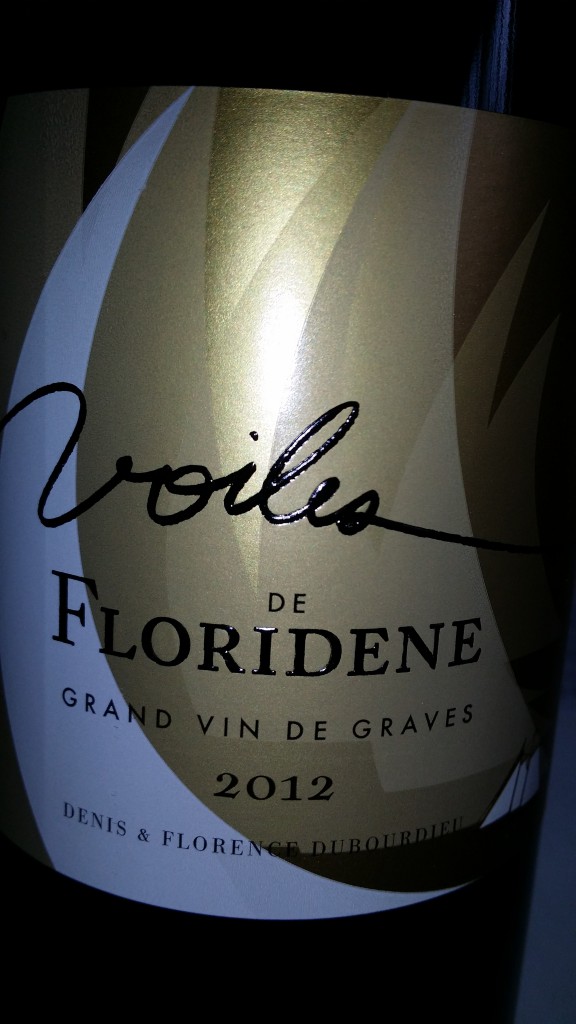
2012 Les Voiles de Clos Floridène, Graves rouge
Belonging to Denis (the famous professor, consultant, and Dean of the Bordeaux Faculty of Enology) and Florence Dubourdieu, Clos Floridène is located in Pujols, quite close to Sauternes, and is better-known for its white wine, produced in more significant quantity.
C: lightish
N: vibrant strawberry and petits fruits rouges, some confectionery notes
T: fresh, thirst quenching, soft, enjoyable young, well-made, and with a short aftertaste
Score: 12.5
Price: 10.95 euros

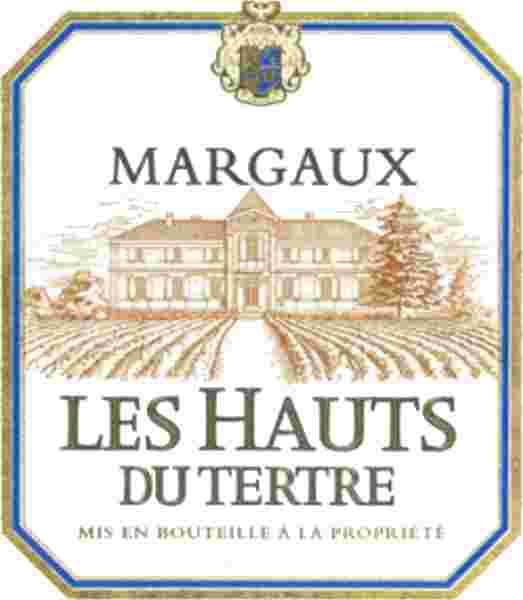
2010 Les Hauts du Tertre, Margaux
This is the second wine of Château du Tertre, a fifth growth in Margaux that is much appreciated by Bordeaux lovers who are seeking quality without paying a fortune.
C: purplish, with medium intensity
N: nice berry fruit, fresh blueberry
T: fluid, light, easy-going tannin, a great luncheon claret! The finish is a little gummy. Needs time, but not much.
Score: 13.5
Price: 21 euros

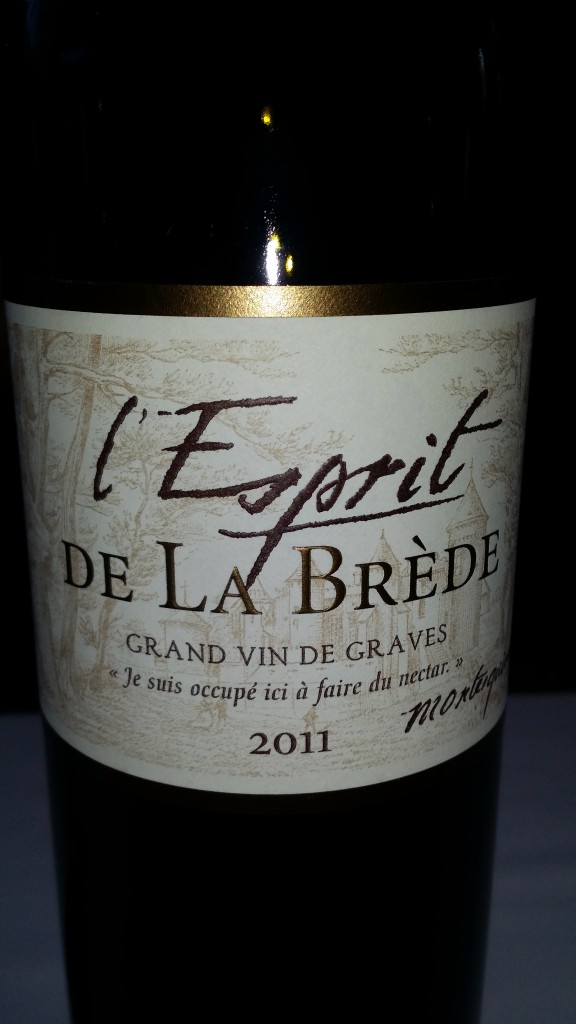
2011 Esprit de Labrède, Graves rouge
Château de Labrède, a genuine castle and major tourist attraction, once belonged to Montesquieu, and stayed in his family until quite recently http://www.chateaulabrede.com/
The vineyard (4 hectares of red and 2 of white wine varieties) had gone out of existence, but was revived on a tenancy basis by Dominique Haverlan, owner of Vieux Château Gaubert, also in the Graves. This is his first vintage, and a very successful one at that.
C: good, medium deep
N: sweet fruit and oak in a minor key, hints of tobacco and a pleasant greenness
T: round, easy-to-drink, modern, with a puckery, lip-smacking finish. Wine of substance and an unexpected pleasure.
Score: 14
Price: 15 euros

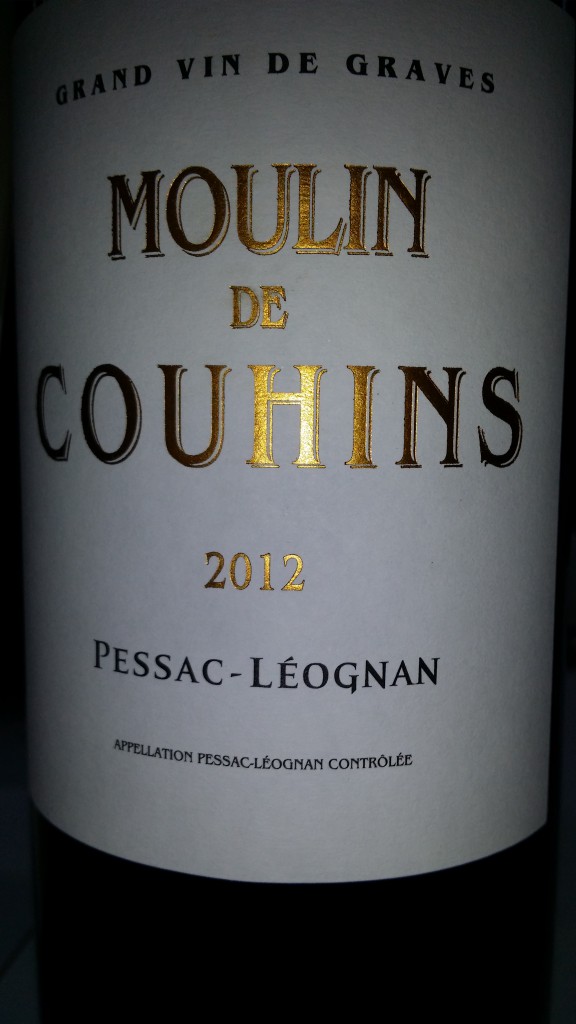
2012 Moulin de Couhins, Pessac-Léognan rouge
Château Couhins is owned and managed by INRA (Institut National de la Recherche Agricole). It has long been under the radar and is a good value for that reason.
C: OK, a little hazy
N: brambly and reflecting its origins, along with discreet oak, and a cosmetic quality
T: sweet, simple, cherry fruit, and light tannin. qaMore grip than most. Should be ideal in 3 years. Some greenness.
Score: 13
Price: 13.50 euros

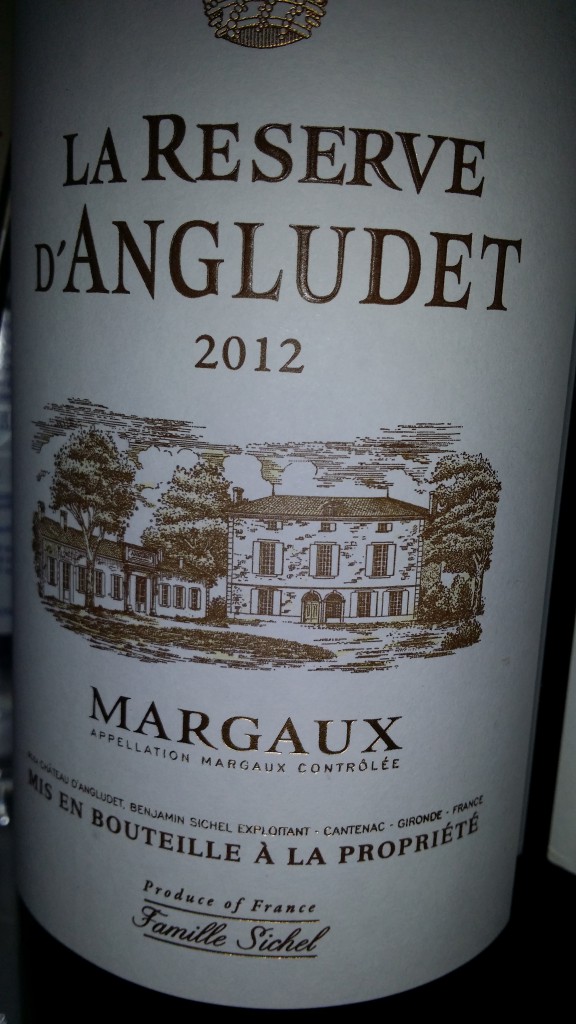
2012 La Réserve d’Angludet, Margaux
Angludet has long had a strong following, and is especially well-known on English-speaking markets due, in no small part, to the owners, the English Sichel family.
C: medium, a little dull
N: upfront, direct, seems relatively commonplace, but pretty with some nice notes of black fruit jelly, with a touch of greenness
T: suave, light, and pure. Nice juicy aftertaste with good tannin but in a minor key. Attractive, to drink young.
Score: 14
Price: 19 euros

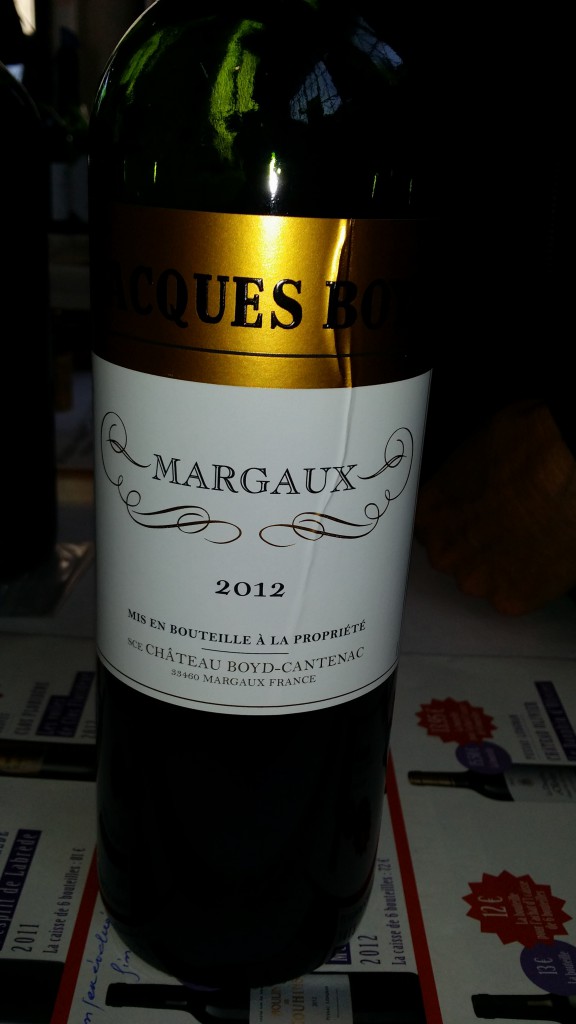
2012 Jacques Boyd, Margaux
Third growth Boyd Cantenac has long had a low profile, but it is a stalwart classic as far as I’m concerned.
C: a little weak
N: old-fashioned, classic Médoc typical of the Margaux appellation. Light, engaging, with some vanilla oak overtones
T: starts off chewy, becoming light on the palate with a pleasing mineral element on the tail end
Score: 13
Price: 24 euros
Lucien Guillemet was also showing the 2002 Jacques Boyd, but this was very tertiary and past its best.
2010 Diane de Belgrave, Haut-Médoc
This classified growth and exclusivity of CVBG (Dourthe-Kressmann) deserves more of a reputation than it has. My notes show a wine that is good rather than very good, but at 13 euros a bottle, this was tremendous value for money.
C: good, medium deep with purplish overtones
N: sweet, pure candied fruit with some class. Rather feminine.
T: sweet once again. Charming and seductive, even if quite simple. A real crowd pleaser. The tannin on the finish, however, is perhaps too rough compared to the wine’s intrinsic body.
Score: 12.5
Price: 13 euros

2006 Sirène de Giscours, Margaux
After going through a variety of phases, Giscours has seemed back on track in recent vintages. This 9 year old second wine, however, was not the best reflection of what the château can do.
C: looking older than its years
N: old, indeterminate, past it
T: ditto
Score: no score given
Price: 26 euros

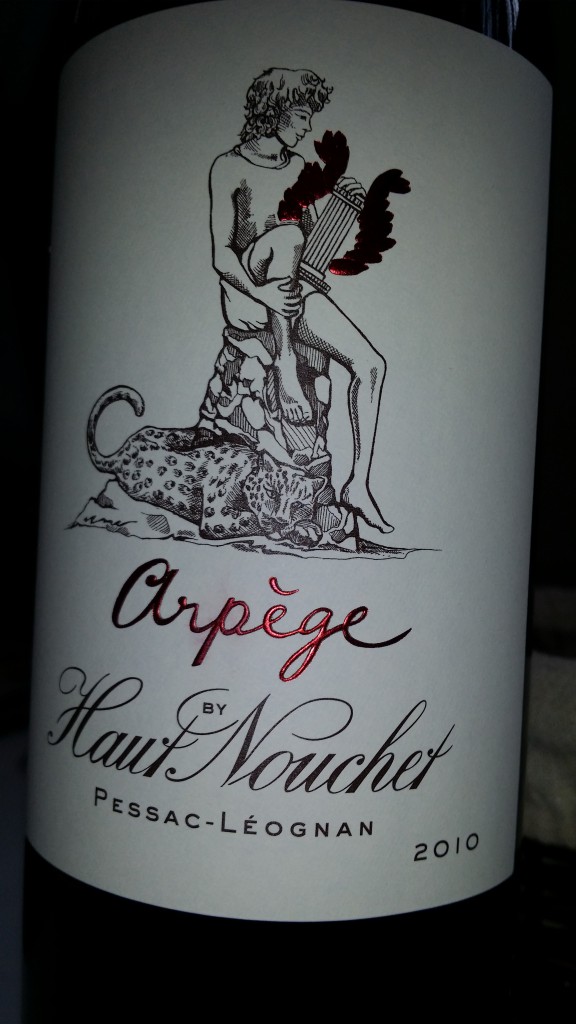
2010 L’Arpège de Haut-Nouchet, Pessac-Léognan
I am not familiar with this estate in Martillac.
C: medium-light with darker core
N: simple and closed with berry fruit. Lacks depth.
T: better than the bouquet. Sweet, but hollow and rather one-dimensional. Tart, bitter finish.
Score: 10.5
Price: 13.5 euros

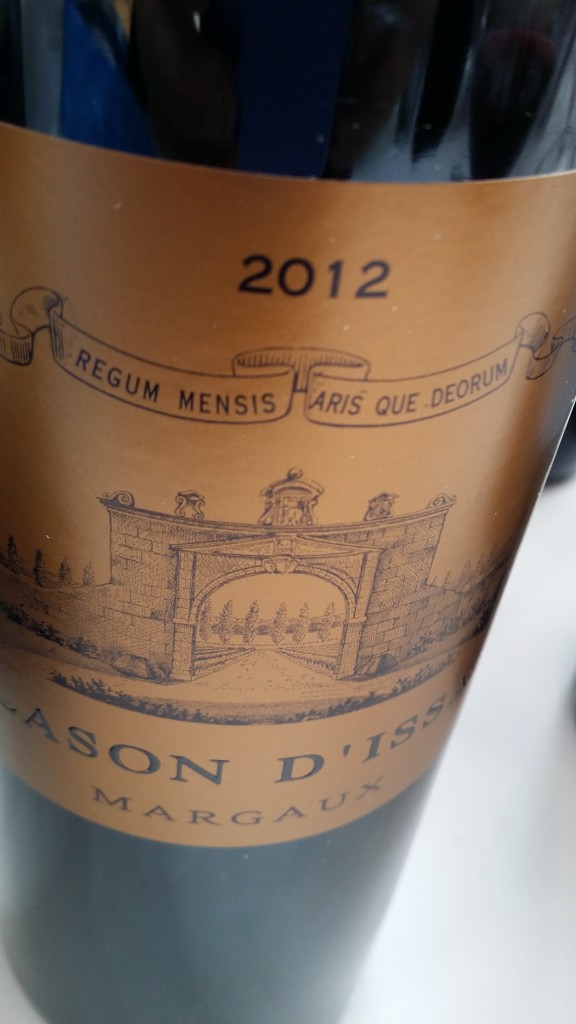
2012 Blason d’Issan, Margaux
Issan is unquestionably one of the best third growths (there are ten of them…) in the Margaux appellation. It is now 50% owned by Jacky Lorenzetti, who also owns Pédesclaux and Liliane-Ladouys.
C: good, youthful
N: straightforward, with lovely, subtle Margaux berry fruit
T: good body and melts in the mouth. Bigger than expected. Magical. Good balance. Nice to drink as of now.
Score: 14
Price: 21 euros

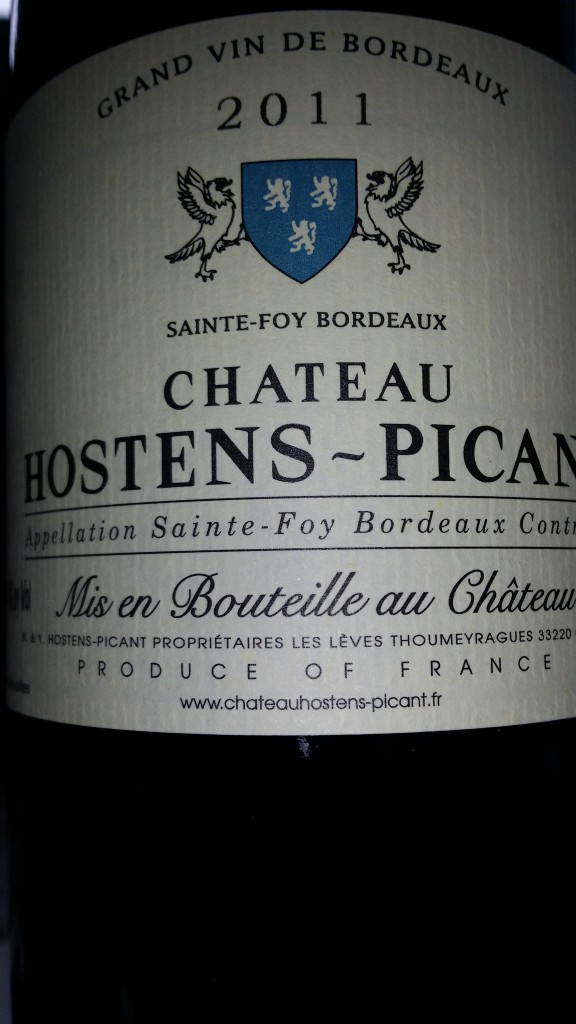
2011 Hostens-Picant, Sainte-Foy-Bordeaux
This estate is located in the tiny and not well-known Sainte-Foy-Bordeaux appellation. I had only previously heard of their white wine.
C: average
N: some ash, quite one-dimensional
T: sweet, but not in a good sense. Barely drinkable. Dry, nasty finish.
Score: no score given
Price: 20 euros

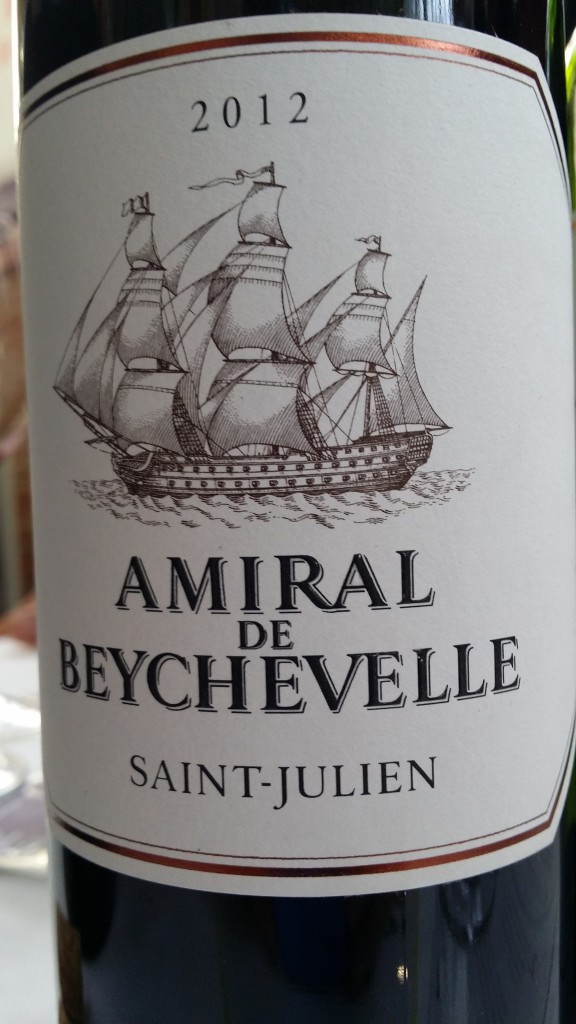
2012 Amiral de Beychevelle, Saint Julien
Fourth growth Beychevelle is clearly on the up-and-up. This was one of the best wines of the tasting.
C: medium-deep
N: solid, well-focused brambly fruit with good definition
T: fleshy and big. Maybe not a long aftertaste, but lovely cherry flavors and good tannin. Potential for ageing there. Archetype of a good 2nd wine. Not second rate by any means
Score: 14.5
Price: 38 euros

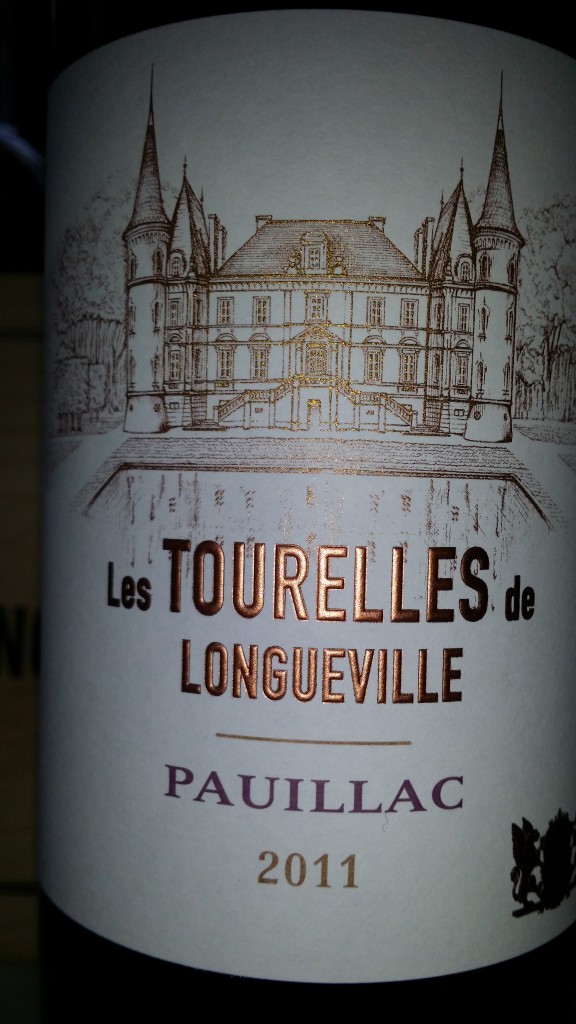
2011 Tourelles de Longueville, Pauillac
This has long been considered one of the best second wines in the Médoc. Only now, Pichon Baron will be producing another second wine – like Clos du Marquis and les Forts de Latour – that claims it isn’t really a second wine… This is called Les Griffons de Pichon Baron, and was first made in the 2012 vintage.
C: medium-deep with a lightish rim
N: deep and enticing, but closed. Some chocolate overtones.
T: silky, satiny texture. Sweetness on palate with high-quality tannin that melts in the mouth with just a hint of greenness. A round, friendly Pauillac that will nevertheless improve.
Score: 14
Price: 39 euros

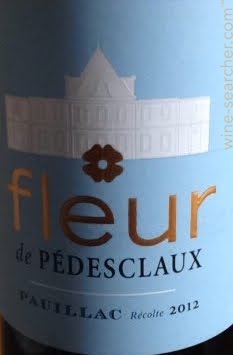
2012 Fleur de Pédesclaux, Pauillac
This fifth growth was nothing short of obscure until Jacky Lorenzetti (an Italian speaker from Switzerland who made his fortune with the Foncia real estate chain) bought it and turned it around.
Pédesclaux is rare in that it is a Pauillac made from 100% Merlot!
C: medium thin with purplish rim
N: sweet, pure bouquet with coffee-vanilla nuances
T: round as one might expect, but also rich, sweet, gummy, and lip smacking good
Score: 13.5
Price: 21 euros


20150926_121231

2009 Réserve de la Comtesse, Pauillac
One expects a great deal from a “super-second” that is universally appreciated, especially in a vintage like this. I was not disappointed.
C: OK, medium-deep, not entirely clear
N: a little simple, but reminiscent of the grand vin. Sweet with graphite overtones.
T: round and sensual with lovely soft tannin. Great finish and showing very well at present (can be enjoyed as of now), but will be fine for the next 5 years. Good acidity.
Score: 14.5
Price: 42 euros

On to the Right Bank…


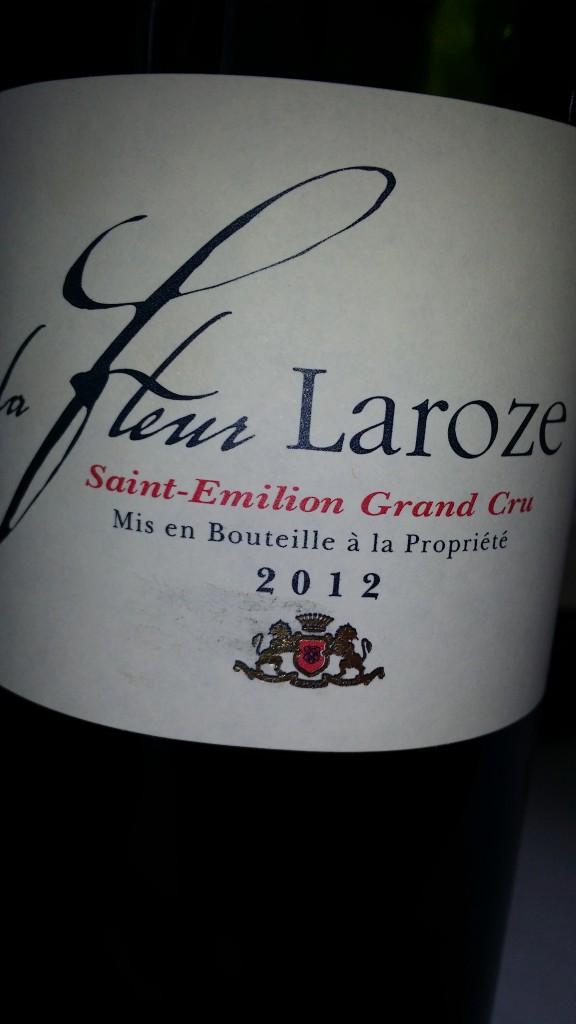
2012 La Fleur Laroze, Saint Emilion
I am not very familiar with this 27-hectare grand cru classé.
C: light and bright
N: a little green and rustic but with deep fruit even so
T: big with good minerality
Score: 12.5
Price: 13.50 euros

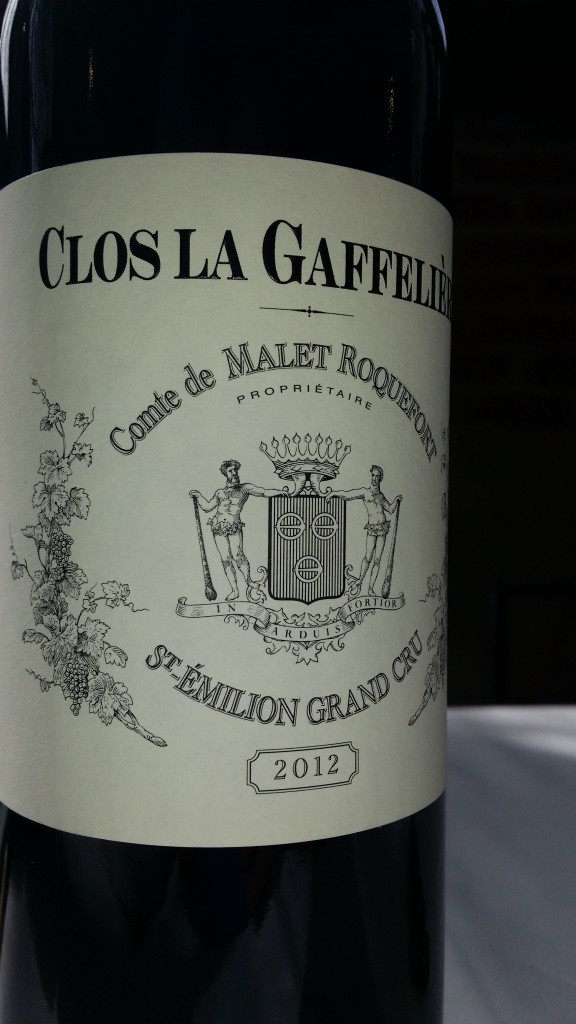
2012 Clos La Gaffelière, Saint Emilion
I am not alone in having some severe disappointments in the premier grand cru classé Ch. La Gaffelière. But the owners have called in consultant Stéphane Derenoncourt and things have changed for the better.
C: medium light
N: lovely, pure, perfumed
T: very soft and upfront, melts in the mouth. Drink sooner rather than later. More voluptuous and big breasted than serious, but lots of pleasure there…
Score: “objectively” 13, but this is a joy to drink
Price: 19 euros – tremendous value for money.

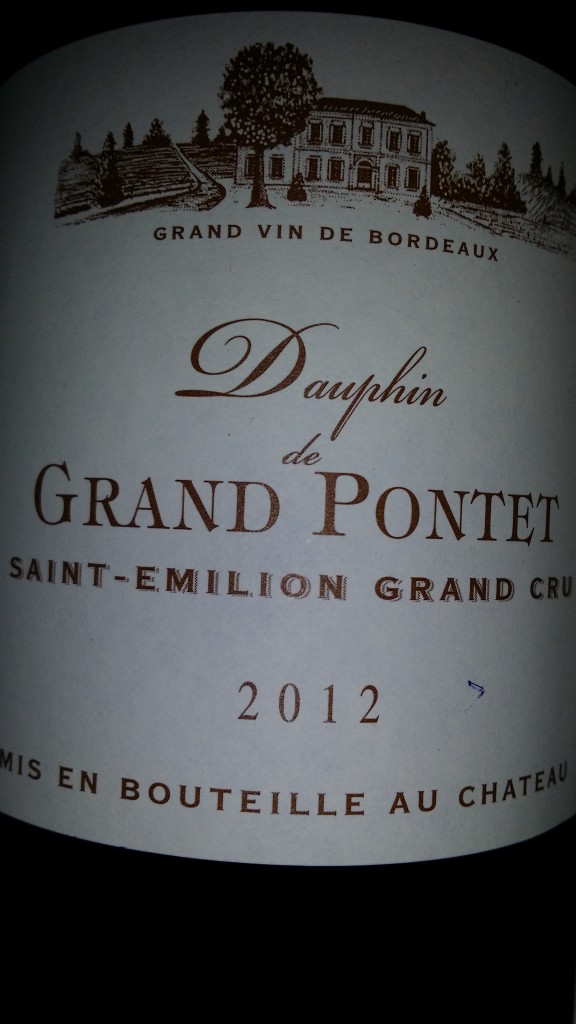
2012 Dauphin de Grand Pontet, Saint Emilion
I’ve not often tasted wine from the 14-hectare grand cru classé Grand Pontet.
C: satisfyingly dark with purple highlights
N: a little weedy along with ripe and candied fruit overtones. Sweet and fairly simple with good, understated oak
T: round, big, and a little hot on the palate. Honest and foursquare, like a rich peasant.
Score: 12
Price: 13 euros

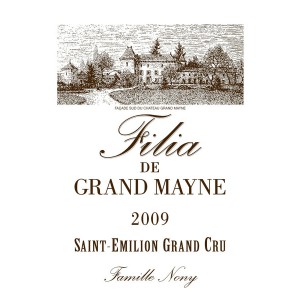
2009 Filia de Grand Mayne, Saint-Emilion
This 18-hectare classified growth has a strong following.
C: very deep
N: coffee, blackberry jelly, and a little rustic
T: big mouthful of wine but a little hollow (weak on the middle palate). Modern with some heat on the finish. Hearty, but lacks finesse. One wonders why the second wine has to be this concentrated. Perhaps a feature of the vintage…
Score: 12
Price: 16 euros

2010 Haut-Faugères, Saint-Emilion (sorry, not shown)
Faugères was promoted to grand cru classé status, and enjoys a good reputation, like the other Silvio Denz wines.
C: very dark and good
N: slightly oxidized
T: better on palate, but top-heavy and still off
Score: not scored
Price: 16 euros

2009 Croix de Beauséjour, Saint-Emilion
This second wine of Château Beauséjour (Duffau-Lagarosse) was a great discovery.
C: fine, with a deep core and slightly browning rim
N: lovely understated cherry-vanilla bouquet, that only lacks some depth
T: nice mouthfeel. Lush and rich, but backed up by fine minerality. Classic. Very good indeed. Drink now until 2022.
Score: 14.5
Price: 39 euros

2011 Marquis de Bellefont, Saint-Emilion
One of the newly-promoted grand crus classes, Bellefont-Belcier is 14-hectare estate recently acquired by a Chinese firm.
C: bit cloudy
N: oak, and more toasty oak, with coffee overtones, that overrides the fruit
T: overdone, intrinsic softness marked by bitterness. Another look needs to be taken at barrel ageing.
Score: 10
Price: 15.50 euros


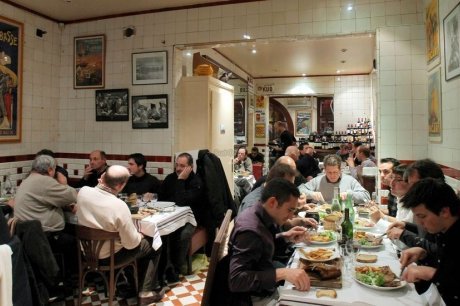
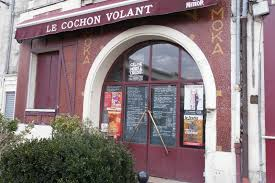
After the tasting, my friend Pierre and I had lunch at the Cochon Volant, a nearby restaurant. This is a wonderful, earthy place featuring the best of cusine from Southwest France. Warning: portions are enormous!
We enjoyed a 2009 Ch. Moulin-à-Vent (Moulis) with lunch.

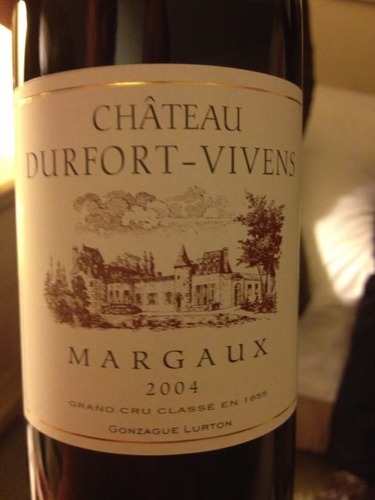
02 Ch. Sociando Mallet, 01 Ch. Talbot, and 04 Ch. Durfort Vivens

44240_org[1]


Everybody loves a success story, and Sociando Mallet certainly falls into that category. When Jean Gautreau bought the estate in 1969, there were just 5 hectares of vines. There are currently 85! However, it was not only production that increased. Sociando Mallet also built up a solid reputation for quality and established a loyal following.
The vines grow on a rise overlooking the Gironde Estuary east of the village of Saint-Seurin-de-Cadourne, the northernmost commune in the Haut-Médoc appellation. The soil is very gravelly, with a clay-limestone subsoil.
Sociando-Mallet did not even ask to be included in the most recent cru bourgeois classification. They felt above it, and the price their wine commands tends to confirm that…
The first time I tasted 2002 Sociando was at the Darroze restaurant in Langon, where I had been invited to lunch by Xavier Gonet-Médeville of Ch. Gilette in Sauternes. This was about 5 years ago and the wine was quite closed at the time. The situation was compounded by the fact that young wines rarely have the chance to open up in restaurants, even when properly decanted.
Anyway, by August 2015, this wine was, unsurprisingly, much more developed. It was decanted 3 hours before the meal. The color made the wine appear younger than its age.
As for the bouquet, Sociando is noted for displaying a decided green pepper quality in certain years, to the point where some people have found it too overpowering. The 2000 vintage is a case in point. Personally, I have never felt this way, but that green pepper factor was there in the 2002, albeit in an understated way.
The wine has a velvety texture and good grip on the palate. It also seems to share characteristics with nearby Pauillac. My friends know that I prefer my wines on the young side, but at 13 years I must admit that this is still not all it could be. It is heady and virile, the perfect wine to have with red meat, making up in vigor and assertive Cabernet fruit what it may lack in elegance. That having been said, Sociando Mallet has just 48% Cabernet Sauvigon (and 5% Cabernet Franc), but this variety seems to dominate the flavor profile.
I would love to taste this wine blind in a line-up of California Cabernets…


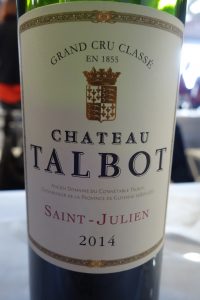
I have visited Château Talbot, a 4th growth Saint Julien only once, a long time ago, and have not tasted their wines as often as I’d like to… I have a fond memory of the odd proprietary bottles the Cordier estates used to come in, with a picture of old man Cordier and his white moustache on the embossed part.

Times have changed, and most of those estates (Gruaud Larose, Meyney, Lafaurie-Peyraguey) have now been sold. Château Talbot, though, acquired by Désiré Cordier in 1917, has been in the family ever since. Talbot has 106 hectares of vines, which is absolutely mammoth in Burgundian terms, and big even in Bordeaux. They also make a small quantity of white wine, Le Caillou Blanc, AOC Bordeaux.
I had just one bottle of Talbot in my cellar, from the 2001 vintage, one usually overshadowed by 2000. However, I’m a huge fan and it is not rare for me to prefer a 2001 to the 2000 from the same château.
So, we enjoyed the 2001 Talbot just after the Sociando-Mallet. The Talbot is the weightier wine, with a deep regal color. The nose is gorgeous, everything I love about the Médoc and classic Bordeaux. It smells like a room with old mahogany furniture polished with beeswax, as well as subtle, pure blackcurrant fruit – none of the famous bretty/phenolic odors sometimes referred to as the “Cordier stink” that existed years ago… The wine is also very traditional, refreshing, and well-balanced on the palate. It is a lovely drink, and while not at its peak, is not far off. This 2001 Talbot is an excellent wine to serve to people who think that “modern Bordeaux” is over-extracted, over-oaked, and over-alcoholic. In fact, it is just the opposite.

2004 Durfort-Vivens

2004 Durfort-Vivens

Château Durfort-Vivens is one of several great growths owned by the Lurton family, but it never seems to attract the same attention as the other Lurton great growth in Margaux, Ch. Brane-Cantenac. The fact that Durfort has 55 hectares of vines compared to Brane’s 75 may have something to do with this, but that doesn’t explain everything. I once enjoyed a lunch with Lucien Lurton and he told me that the “dur” (meaning “hard”) in Durfort describes the wine’s character. It is perhaps this slightly austere and unyielding side when young that makes Durfort less popular.
The Lurtons sold the actual château building to Philippe Porcheron, who renamed it Château Marojallia. The château is now a luxury hotel as well as the name of the AOC Margaux garage wine Monsieur Porcheron produces.

2004 Durfort Vivens has a browning rim and dark core, with thick legs. The nose is soft and smoky, with subtle cosmetic and chocolate overtones, along with a major earthy/truffle component.
The wine starts out smooth on the palate, showing textured tannin, but the finish unquestionably displays that Durfort hardness, and the wine is starting to dry out.  While enjoyable at table, this smelled better than it tasted, and the balance is such that any evening-out of the tannin in a few years will leave the fruit behind. In short, I am somewhat disappointed, especially since I rated the wine highly when tasted en primeur in spring 2005.


2009 Durfort-Vivens

2009 Durfort-Vivens


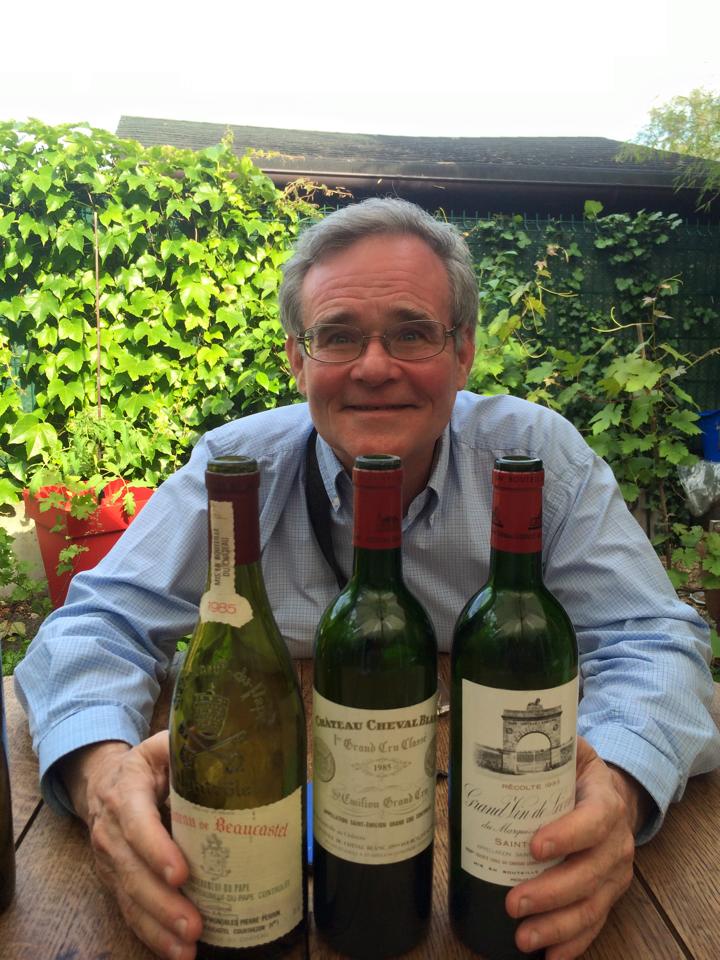
A wine lunch including 85 Cheval Blanc and 85 Léoville Las Cases

Emilie Porcher is a young Frenchwoman originally from the Loire Valley who came to study in Bordeaux. Like many before her, she was smitten with the place and has decided to stay.
Emilie is also active on the Internet https://plus.google.com/116247789402476926405/posts

In order to celebrate her 30th birthday, Emilie invited some friends over to share wines from her birth year, 1985 – a very good one in Bordeaux.

I do not like taking notes at social occasions, and even less at table, so here is an overview of what we drank.

There were two sweet wines for the aperitif: a 2002 Gewurtztraminer vendanges tardives from Clos Saint Landelin and a 2005 Rayne Vigneau, first growth Sauternes.
I must confess to not usually liking Gewurtz, finding it frequently too aromatic and never knowing beforehand how sweet it will be (a frequent issue with Alsace…). This wine, however, was not over the top. It had a fairly deep bronze and golden-amber color and a delicate white fruit nose (pear, gooseberry, jujube) with hints of rose petal. Some botrytis was evident as well as candied fruit overtones. The wine was quite sweet and smooth on the palate –  the sort I enjoy in small quantity.
The Sauternes, 10 years old, had a medium deep color. The bouquet was honeyed, but a little one-dimensional. The wine showed better on the palate, with good acidity. The best part of the taste profile was the finish, which has that attractive bitterness that serves as a foil to the sweetness of the best Sauternes. This can be enjoyed now, but will hold.

Below is a rare picture of Alex the blogger:

Alex chez Emilie


The first wine at table was not served blind. This was a 2013 Odé d’Aydie, from Pacherenc du Vic Bihl, the white wine made in the Madiran region (60% Petit Manseng and 40% Gros Manseng). This had a nose reminiscent of Sauvignon Blanc and decided grapefruit aromas. The citrus component continued onto the palate, which was rather average. The wine was just too sharp for me.

The first red wine was poured blind. I hesitated for some time as to which side of the river it was from, and incorrectly plumped for the Left Bank. Perhaps I can be forgiven because it turned out to be an 85 Cheval Blanc which, as we all know, has a high proportion of Cabernet (Franc). I should have known better since there was a definite emyreumatic note….  Anyway, the wine looked quite old and had a very tertiary nose of lead, tobacco, cherry, and sweet pepper. It was fully resolved on the palate and is still quite tannic on the finish. The bottle we shared of this outstanding wine was a little tired, but still a great treat.

The second red wine of the meal was 1985 Léoville Las Cases. I have had this wine before on several occasions, but guessed it was a Latour. In fact, one whiff sent me to Pauillac… The LLC was more vibrant than the Cheval, but also considerably evolved. It is a subtle wine with good acidity and a long, velvety aftertaste. I think it is past its best, but still a wonderful pleasure.

The last red wine was an 85 Beaucastel, Châteauneuf-du-Pape. This seemed oldest of all, and quite faded, but a wine to sip on slowly, gratefully, and meditatively at the end of the meal.

An unforgettable tour of top-flight châteaux – day one

As mentioned below, I belong to a virtual community based in several countries called www.bordeauxwineenthusiasts.com

Along with a friend in Paris and others in London and the US, I organized a 5-day tour of top-flight Bordeaux châteaux for 18 people.
This took a great deal of planning, months in advance, but was well worth the effort.

We started off with Château Palmer. All my Bordeaux-loving friends adore Palmer, and I’m not about to disagree. It is not rare for me and others to find Palmer better than Margaux in certain vintages, and such was the case with 2014 in my opinion. Anyway, we were shown around by Céline Cassat, and I give her full marks for starting out in the vineyard, explaining the lay of the land, the estate’s winegrowing philosophy and, of course, their recent turn to organic and biodynamic viticulture. This was as opposed to most châteaux that only show visitors their cellars.
Palmer has been entirely renovated and is clearly in full swing. The grounds are beautiful, the château looks great, and the cellar is now magnificently-equipped.
We tasted 2011 Alter Ego and 2006 Palmer. The former was smooth and is in an early-maturing, more commercial style. The latter had velvety tannin and good grip, and will also show well before too long.

We went from Palmer to 5th growth Château du Tertre, which has belonged to Dutch businessman Eric Albada Jelgersma since 1997, as has 3rd growth Château Giscours. Several members of the group had specifically asked to go to du Tertre because the wine offers such excellent value for money. We were very well received by Marc Verpaalen and not disappointed with what we tasted. After sampling the elegant and fairly forward 2012 du Tertre and 2012 Giscours, we went for a light lunch on a beautiful veranda overlooking a swimming pool and the château.
You have to admit that Bordeaux does some things extremely well…
The wines we had at lunch were 2009 du Tertre, 2006 Caiarossa from Tuscany (also owned by Eric Albada Jelgersma), 2014 Giscours and du Tertre, as well as 2004 Giscours. The 2014s are very promising and the 2004 was good for the vintage and ready to drink now.
Marc informed us that since the owner’s son is allergic to red wine, Château du Tertre will be soon be producing a white wine.

While organizing this trip, I learned that the first growths now limit the number of visitors, which made planning things a little hairy. Such was the case with Château Latour, who accept no more than 10 people. However, much to their credit, they agreed to welcome two groups in succession.

While the first group visited Léoville Las Cases, the other half, including myself, went to Latour. Like many top-flight châteaux, they have expanded and renovated their cellars, which are now in tip-top condition. We were first of all ushered into a room to watch a film about the château. This had tinkly faux-Zen music and didn’t seem particularly to focus on Latour rather than any other wine estate. Once past this rather boring introduction, we went on a guided tour. The facilities were as impeccable as one would expect at a first growth. We also admired their new wine library, with magnums going back a very long way. The tasting room is wonderful, and we sampled three wines there: the 2011 Pauillac, the 2008 Forts de Latour, and the 2004 Latour. The Pauillac was very attractive, Les Forts lacked some richness and concentration, but was still quite nice, and the Latour proved to be lovely with fine textured tannin. It is also quite enjoyable to drink now. No, you don’t always have to wait decades to drink these wines, even if that is the case in great years.

Gruaud tower

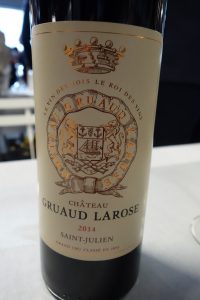
After Latour, I went with half the group to Château Gruaud Larose. This was a wonderful visit. It started out with a trip up a steel tower that has just been built to house an observation post and a visitor reception center. This affords a fantastic view of the estate and the surrounding countryside, including manicured grounds and gardens. We were taken around the cellars by winemaker Stéphanie Lebaron Bouchonneau. As always, it’s the person and not the surroundings, however luxurious they may be, that makes visiting a wine estate memorable. Stéphanie is charming, relaxed, funny and, above all, extremely competent. She poured us a number of wines. 2014 Sarget (the second wine) was simple and nice, 2014 Gruaud Larose quite tannic and promising, 2006 GL a little too oaky, and 1998 GL – 17 years old – perhaps a little dry, but at its peak and very enjoyable. It is a treat and a rarity to drink a wine that old when visiting a Bordeaux estate.

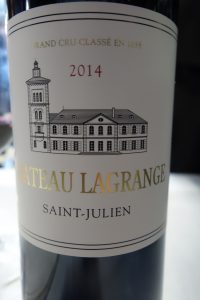
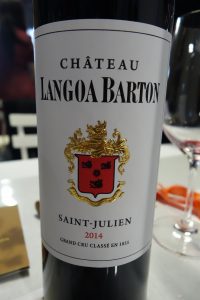
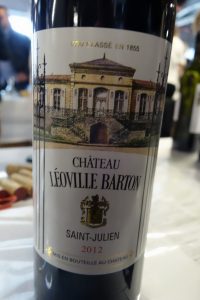
Afterward, we went to Château Léoville Barton, where Liliane Barton welcomed us warmly, despite the fact that we were not on time… Liliane’s family have owned Langoa and Léoville Barton since the 1820s, and are definitely part of the Médoc aristocracy. However, Llilian is a relaxed, down-to-earth person and very much a philosopher in her own way. Trends come and go, but the Bartons have nearly two centuries of experience in making fine wine, and so are very circumspect. For instance, Liliane is against green harvesting because she feels that what works one year complicates things the following year. We started out by tasting the other Barton estate, 2011 Château Mauvesin-Barton, which I have talked about elsewhere on the blog. We then sampled 2012 Langoa Barton which, like some other wines from this vintage, was already showing very well. The 2014 Léoville Barton was sweet and seductive on the nose, lacking perhaps just a touch of weight and richness to back up the structure. It is nevertheless a fine, classic wine.

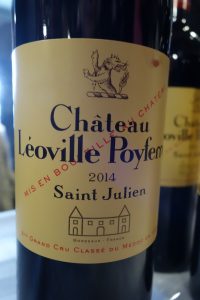
The final château that day was Léoville Poyferré, where we were welcomed by the bubbly Anne Cuvelier, who speaks good English and clearly enjoys explaining the ins and outs of winemaking. The group had dinner at the newly-refurbished château (a recurring theme, as you can see).

If you have read this far, please note that all of the above was in just one day, which is about the maximum anyone could possibly fit in!

We tasted the wines at dinner rather than beforehand. The 2014 Moulin Riche was light, fruity, upfront and – unsurprisingly – less serious than the grand vin. The 2012 was better than expected and I am not far from thinking that 2012 may actually be better than 2011 in many instances in the Médoc. The 2008 Léoville Poyferré had a fine ethereal nose and lovely blackberry flavors on the palate. The 2007 was light and refreshing and the 2005 was deep and classic, with rich berry fruit.

An unforgettable tour of top-flight châteaux – day four

20150522_112715

Flags out in honor of visitors

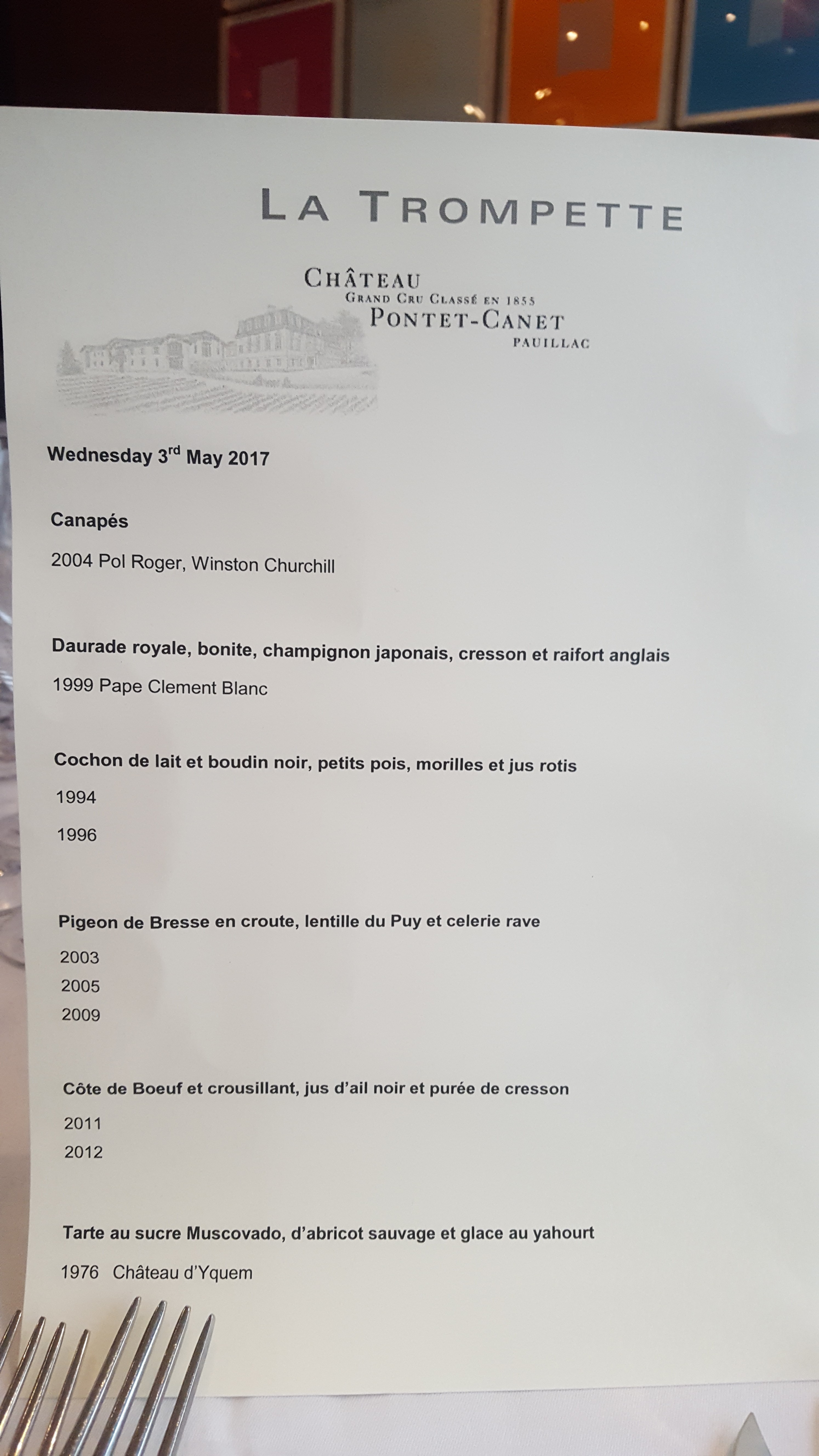
Pontet Canet - menu

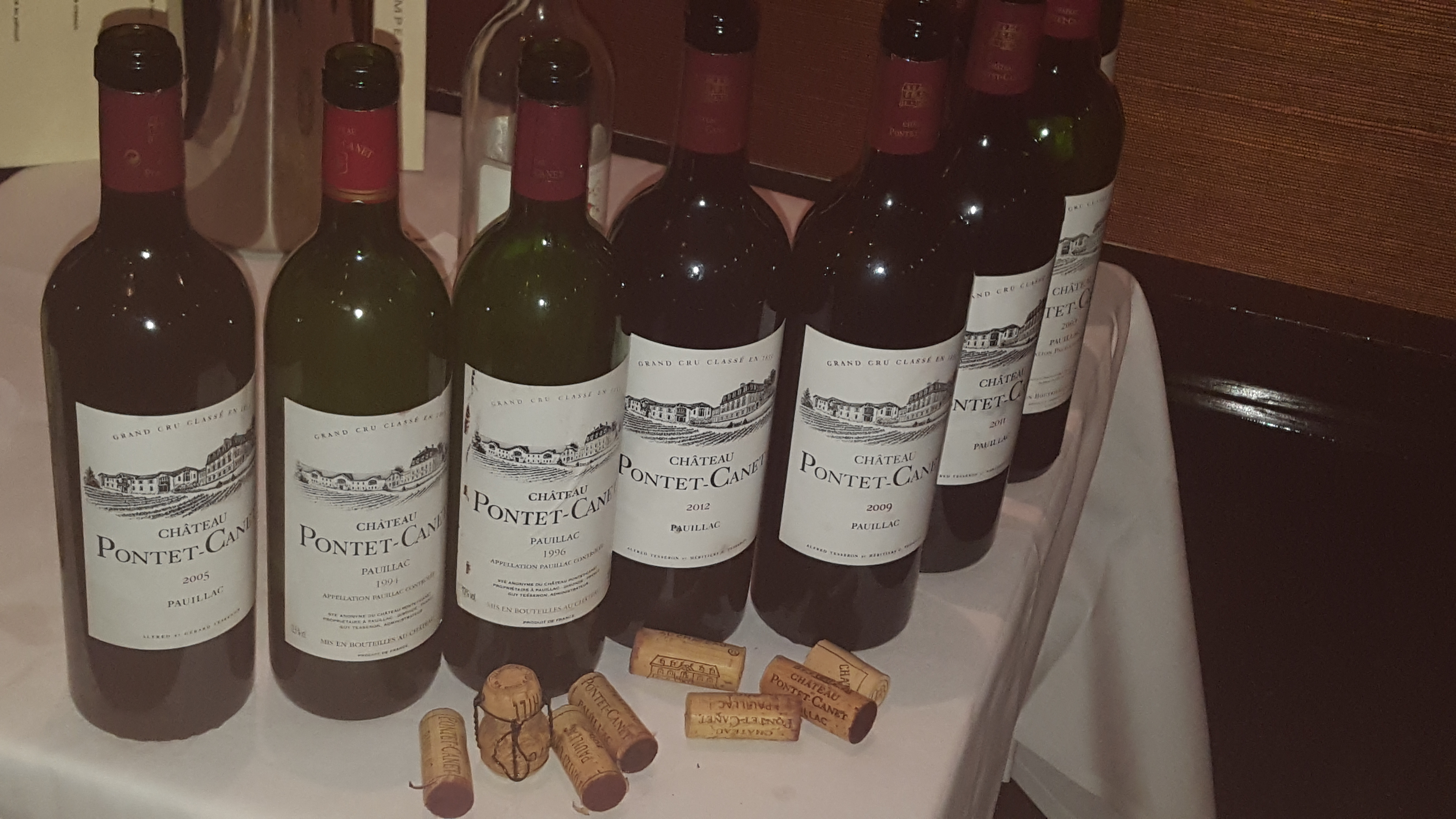
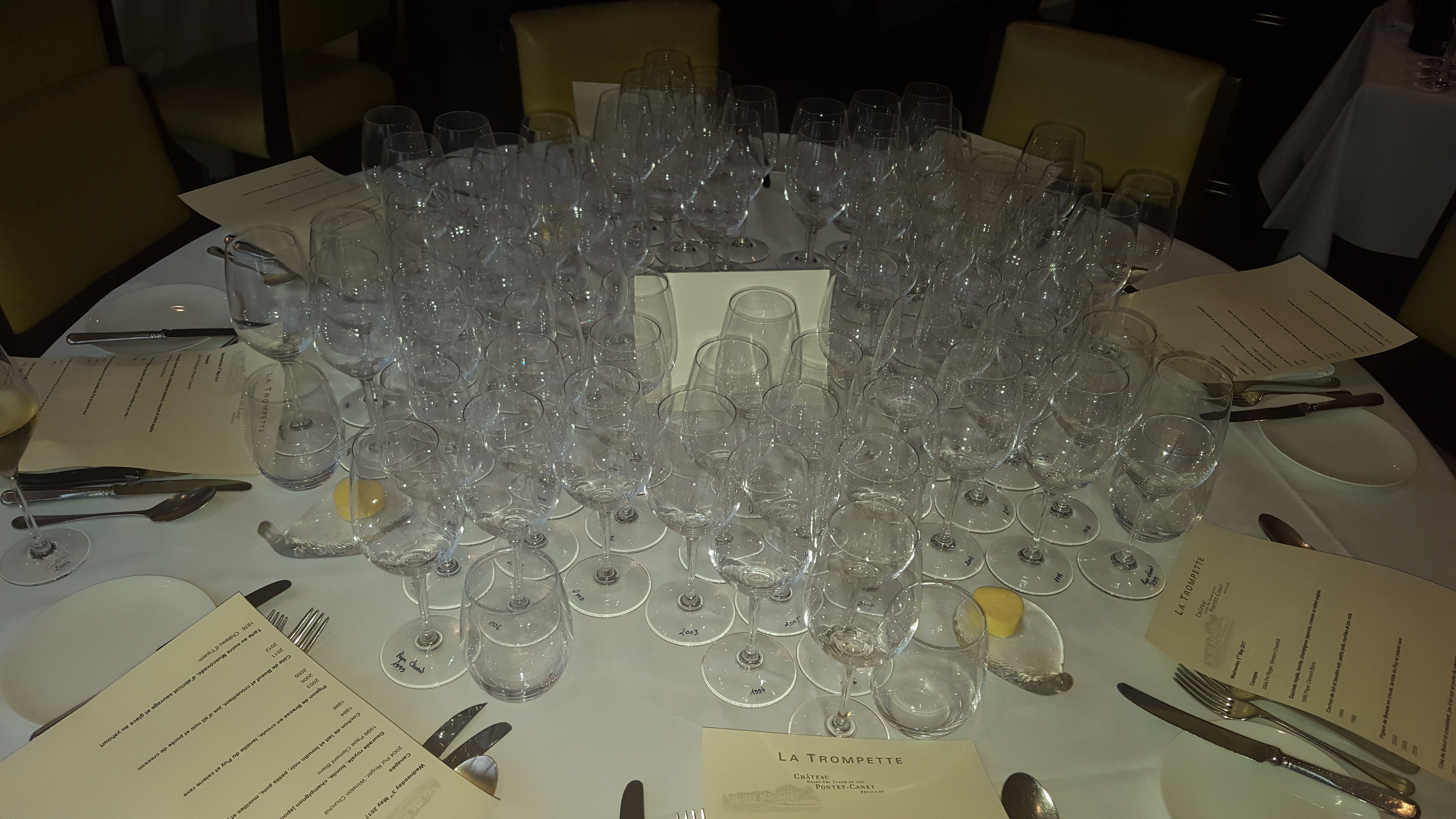
Our final day was a wine lover’s dream. We arrived at Château Pontet Canet at 11 am and immediately noticed three flags had been put up in honor of group members hailing from Canada, England, and the US. We took a walk around the vineyards with the English-speaking guide and then tasted four wines (2014, 13, 12, and 11 – but not in that order) with Alfred Tesseron and estate manager Jean-Michel Comme. I actually preferred the 2012, followed by the 2014, the 2011 and the 2013. Then it was time for lunch. And what a lunch it was! Drinking 2003 Dom Pérignon in the château salon was a very good kick-off. Then all 18 of us trooped to the formal dining room where Alfred Tesseron held court, despite feeling somewhat under the weather.

The 2000 Pontet Canet is ready to drink, which is the case with many wines of that vintage despite what you may have heard. The 2003 is a somewhat controversial wine, but it showed very well – not too big, although a little raisiny. Alfred Tesseron says that appearances are deceptive and that it has a long life ahead of it. The 2005 was not quite up to the vintage’s reputation in my opinion.

One of the group members had brought a 1962 Pontet Canet purchased at auction years ago. Alfred Tesseron went into his private cellar and brought out a bottle from the same vintage so we could compare. In fact, the wines were not far apart, and I actually preferred the one that had been trundled many miles and stored less than perfectly.

2001 Ducru

Afterward, we drove to Château Ducru Beaucaillou, where cellarmaster René Lusseau took us around. He is a true product of the Médoc and translating his puns and local references was no easy task. We visited their semi-underground cellar and went on to taste three wines. 2011 Lalande Borie was a little one-dimensional, but good enough. The 2008 La Croix Beaucaillou was showing a little too much oak, and the 2001 Ducru Beaucaillou was at its peak –  which makes me think it is high time to start opening the fine wines in my cellar from that vintage.

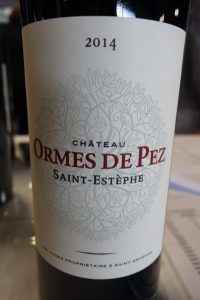
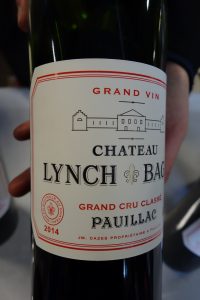
Our next stop was at Lynch Bages. This estate is very much into wine tourism. Not only do they receive visitors easily, including on Sunday (a rare phenomenon in Bordeaux), but the Cazes family has also established a little hamlet nearby with a restaurant (Café Lavinal), baker, butcher, and gift shop. We received a standard tour and then tasted several wines from the Cazes stable, starting with Les Ormes de Pez, Echo de Lynch Bages, and Lynch Bages from the 2014 vintage. Unsurprisingly, Lynch Bages was the star here, with the château’s trademark blackcurrant fruit. We also tasted 2007 Ormes de Pez and Lynch Bages, neither of which left a particularly fine impression.  We finished with the 2014 Blanc de Lynch Bages that displayed a very fresh varietal (Sauvignon Blanc) nose and a considerable amount of oak.

The last stop of the day, and the end of the tour, was at Château Pichon Longueville. This was a wonderful end to a memorable trip. We were taken around by Nicolas Santier, who did a tremendous job. He is extremely well-informed, speaks excellent English, and has a great sense of humor. He made us feel very much at home – even when we went to dinner in the château, in the lap of luxury…

Prior to dinner, Nicolas took us through a fascinating tasting in one of the best equipped tasting rooms I know. It was also quite appreciable to be able to sit down by this point!
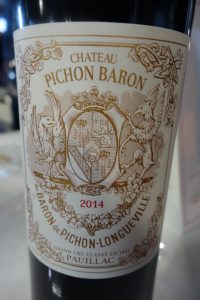
We sampled 2014 Pibran and then 2014, 2010, 2009, and 2008 Pichon Baron. I think Pibran is one of the best value wines in the Médoc and was therefore not surprised to enjoy the 2014. All the Pichons were top-notch, and I was especially taken with the 2008. The others may be intrinsically better, but they need a great deal of time to come together, especially the 2010.

We went from the tasting room to the château, where we were immediately served a glass of Jacquesson Champagne (I believe it was the 735, but why in the world do they give their wines numbers instead of names?) and invited to walk around and admire the beautifully decorated rooms and antique furniture. Then it was time for a formal meal in the lovely dining room. The following wines were served: 2012 “S” de Suduiraut (a dry Sauternes), 2004 Pichon Baron, 2003 Pichon Baron, and 1988 Pichon Baron. The white wine was perky and nice, more attractive than serious, and probably best enjoyed young. The 2004 Baron was a little weak on the middle palate, a tad dry, and still youthful. The 2003 once again belied the preconceived notion that the wines of this vintage are top-heavy, overly alcoholic, and flabby. 2003 Pichon was certainly rich, but not outrageously so, and had good acidity. Very pleasant. The 1988 was served blind and correctly guessed by one of the group members who had bought cases of the wine. It was “à point” and a wonderful way to end the series. A silky, aromatic 2005 Suduiraut was served with dessert.

We left the château replete, tired, and extremely happy. Looking back at the floodlit château and its reflecting pond, we were filled with admiration for the majesty of the great wines of Bordeaux, as well as the genius of the Bordelais in linking their wines with magnificent structures such as this.

Pichon by night

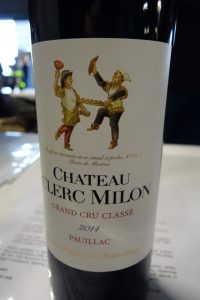
2000 Château Clerc Milon

I’m having a whale of a time drinking many of my 2000 Bordeaux. There will always be people telling you to wait another couple of decades, to which I say “Bah, humbug !”. Of course, the very top wines may need that much time. But many, many wines of less exalted lineage are fine just now.
Trust me.

20150118_174649[1]


To wit, this 2000 Clerc Milon (40 hectares), a 5th growth from the Mouton Rothschild stable. I’ve always liked Clerc Milon and agree with conventional views that it is one notch above its brother, another 5th growth Pauillac, Ch. d’Armailhac (70 hectares), with which it is inevitably compared. This is reflected in the prices of the respective wines.

I visited the new Clerc Milon cellar last year. It is built in a resolutely modern style on a rise directly overlooking Ch. Lafite Rothschild.
Apparently, a new cellar is also planned for d’Armailhac in the near future.

Back to the wine… 2000 Clerc Milon has a medium-deep colour and a bricking rim, looking slightly older than its age. The wine leaves thick legs on the glass. By the way, there is a common misconception that this is due to glycerine. However, I can remember a tasting tutored by the late Professor Emily Peynaud in which he said that this is incorrect: it is due to alcohol.

The nose is not very pronounced. It is a little dusty with subtle hints of raisins and black fruit jelly.

The wine is more interesting on the palate. It starts our round, then dips, and comes back with an assertive velvety tannic texture. It is warming, a little dry, and has a strong finish that even displays a little alcoholic hotness. The flavors include ethereal cherry-vanilla nuances and even some menthol/eucalyptus notes. The aftertaste is what makes this wine worthwhile. The textured tannin and grip also show that, although it has definitely entering its drinking window, it will stay on its plateau for a long time. In the galaxy of Médoc great growths this wine is middle of the road. But that’s still saying a great deal, and it is unquestionably a good, solid Pauillac.