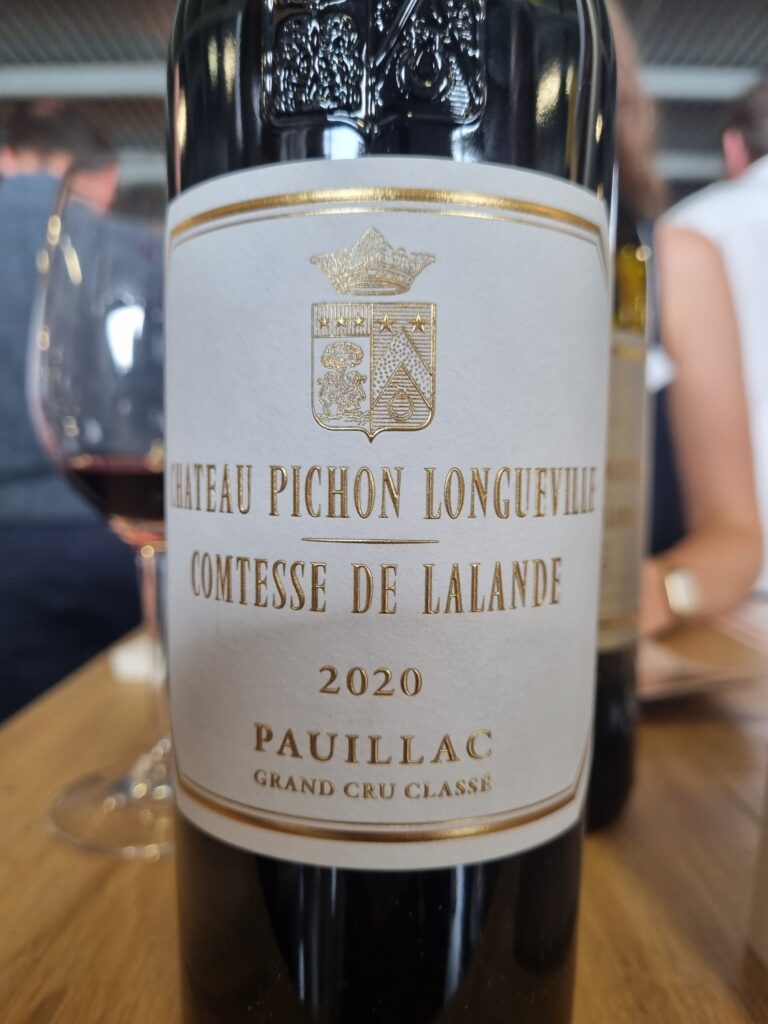
Tag Archives: bordeauxwine

2016 Pessac-Léognan (13 wines)


Bouscaut (55% Cabernet Sauvignon, 38% Merlot, and 7% Malbec)
N: Soft, simple, and direct. Understated and good.
P: Unexpectedly light and feminine. Not in keeping with the château profile. I can only deduce that this is not the best sample, because I feel the wine is only a shadow of what it should be. Very oaky aftertaste. To try again down the line.

Carbonnieux (50% Cabernet Sauvignon, 45% Merlot, 4% Cabernet Franc, and 1% Petit Verdot)
N: Slightly medicinal. Relatively closed and not showing much fruit at this time.
P: “Fluid”, easy-going, and not over-extracted. However, too light and disappointing when the improved performance of this château’s red wine in recent years is considered.

Carmes Haut Brion (41% Cabernet Franc, 39% Merlot, and 20% Cabernet Sauvignon)
N: A certain tankiness there but, once again, that cannot be held against a wine this young, and may well dissipate. The alcohol overwhelms the berry fruit somewhat at this stage.
P: Soft and lively. Good acidity and discreet fine-grained tannin. Considerable sweetness and Graves typicity on the finish. Agreeably old-fashioned in a way. Needs time for greater balance, but promising.

Domaine de Chevalier (65% Cabernet Sauvignon, 30% Merlot, and 5% Petit Verdot)
N: Inky, serious, and enticing nose of ripe black fruit with a touch of mint.
P: Smooth and sophisticated with a vein of fresh acidity. Good fruit, resonant tannin, and a long aftertaste. Oak seems fairly strong at this stage. Very good indeed.

Fieuzal (70% Cabernet Sauvignon, 15% Merlot, 10% Cabernet Franc, and 5% Petit Verdot)
N: Rich soft-pedalled wildberry aromas.
G: Certainly refined, but on the light side and lacks stuffing. Relatively long, but not very vigorous finish.

Haut Brion: (56% Merlot, 6.5% Cabernet Franc, and 37.5% Cabernet Franc)
N: Restrained and aristocratic. My notes say: “soft, soft, and soft”.
P: This quality comes through on the palate as well, within a delicate tannic framework. Elegant to the end of its fingertips… Velvety texture and no rough edges even at this stage. Superb acidity. Will be a great beauty down the line.


Larrivet Haut Brion (62% Cabernet Sauvignon, 30% Merlot, and 8% Cabernet Franc)
N: Slightly rustic but forthright with intense berry aromas and a bit of greenness. Honest. Not messed around with.
P: Quite natural on the palate as well. Vibrant acidity with an oak kick on the finish, but this is not over the top. Good middle-of-the-road wine reminding me somewhat of La Louvière, although different, of course.

Latour Martillac (55% Cabernet Sauvignon, 33% Merlot, 8% Petit Verdot, and 4% Cabernet Franc)
N: Elegant, including the oak. Restrained and aristocratic with black cherry aromas.
P: Gorgeous ripe fruit at first and then thins out some. Typical of its appellation. Sleek and on the light side. Good medium-long aftertaste.

La Louvière (65% Cabernet Sauvignon, 30% Merlot, and 5% Petit Verdot)
N: Upfront with fine blueberry aromas. Not overoaked.
P: Plush soft berry fruit. Very Pessac-Léognan. Medium-light body. Clean mineral aftertaste with a mint/eucalyptus component. One for mid-term ageing.


Malartic Lagravière (53% Cabernet Sauvignon, 40% Merlot, 4% Cabernet Franc, and 3% Petit Verdot)
N: Ethereal and pretty cherry liqueur bouquet.
P: Round and feminine with lovely follow-through. Wonderful perky tannin with vivacious acidity. Not rich, but not light either. Despite a thirst-quenching quality, this is a serious wine with great aromatics. My notes say “vin de gastronomie” meaning it would shine especially at table with refined cuisine.
Mission Haut Brion: (57.5% Merlot and 42.5% Cabernet Sauvignon)
N: Monumental and Margaux-like with some tarry overtones. Lovely integrated oak. Incredible blackcurrant and essence of red fruits.
P: Full-bodied, even chunky, as well as quite mineral with excellent follow-through. Otherworldly aftertaste with tannin of enormous finesse. There is first class acidity to counterbalance the full body. Killer, never-ending finish…

Mission Haut Brion: (57.5% Merlot and 42.5% Cabernet Sauvignon)
N: Monumental and Margaux-like with some tarry overtones. Lovely integrated oak. Incredible blackcurrant and essence of red fruits.
P: Full-bodied, even chunky, as well as quite mineral with excellent follow-through. Otherworldly aftertaste with tannin of enormous finesse. There is first class acidity to counterbalance the full body. Killer, never-ending finish…

Olivier (50% Cabernet Sauvignon, 45% Merlot, and 5% Petit Verdot)
N: Penetrating nose with alcohol coming through more than fruit. Also a note I can only describe as acetone.
P: Chewy, a bit hollow, rough, and dry. This wine is not together and needs to be retasted to form a more accurate impression.

DSC03141
Pape Clément (50% Cabernet Sauvignon and 50% Merlot)
N: Deep, brooding dark fruit aromas just emerging. Strong but unfocused. Rhônish.
P: Round inside a framework of fruit and oak tannin. Too much oak? Time will tell. Bit dry on the aftertaste, but also mineral. Uncertain prognosis at this time.

2016 great growths: Pauillac, Saint-Estèphe, and Saint-Julien (30 wines)

Pauillac
======


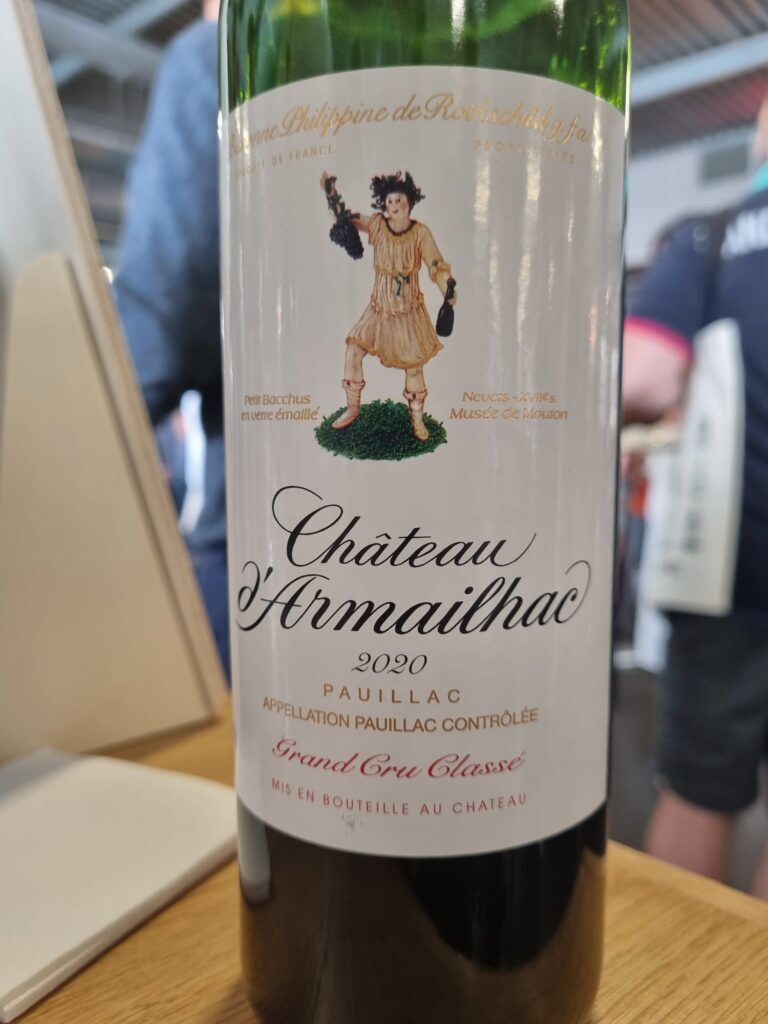
Armailhac (62% Cabernet Sauvignon, 28% Merlot, 8% Cabernet Franc, and 2% Petit Verdot)
N: Sweet oak for the sweet fruit (blackcurrant and rich ripe blackberry).
P: Mouthfilling, rich, and attractive, but lacks backbone. Marked acidity on finish coats the teeth. Oak comes through too strongly, but this may just be temporary.

Batailley (85% Cabernet Sauvignon, 12% Merlot, and 3% Cabernet Franc)
N: Ripe fruit and plenty of oak, perhaps too much at this stage. Classic.
P: Round seductive attack, then dips, then returns with an aftertaste marked by acidity, tannin, and oak (especially the latter). Unexciting, but dependable.

Clerc Milon (55% Cabernet Sauvignon, 29% Merlot, 13% Cabernet Franc, 2% Petit Verdot, and 1% Carménère)
N: Lovely, powerful bouquet with decided violet nuances and some alcohol. Also blackberry and cassis nuances.
P: Round with a fine acid streak. Medium-long aftertaste. Really very good.


Croizet Bages (55% Cabernet Sauvignon, 41% Merlot, and 4% Cabernet Franc)
N: Sweet and simple, needs time to express itself.
P: Melts in the mouth. Sensual and fruit forward with sweet oak on the finish, perhaps too much at the present time. Simple structure and weak on the middle palate. Better than Croizet Bages has been in the past, but the improvement is nowhere near as patent as with the sister estate in Margaux, Rauzan-Gassies.

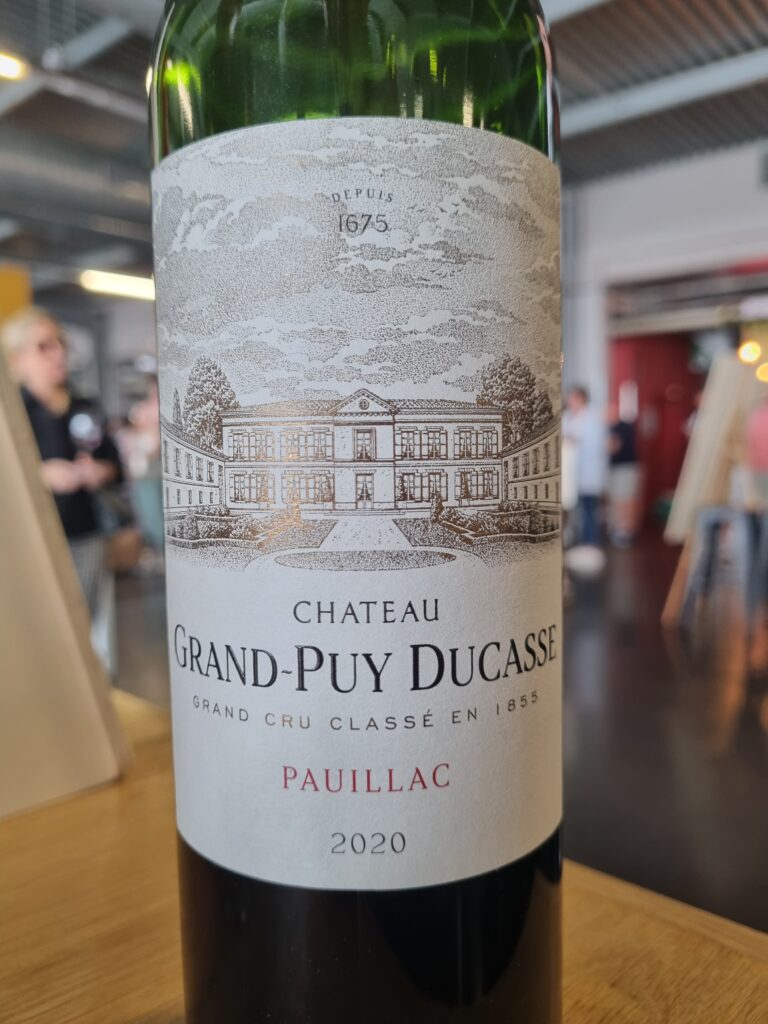
Grand Puy Ducasse (65% Cabernet Sauvignon and 35% Merlot)
N: Floral and grassy along with sweet red fruit, but not very concentrated.
P: Starts out deceptively soft, going on to show blackcurrant flavors and velvety tannin that converge into an aftertaste with marked teeth-coating acidity and plenty of oak – but which stops short of too much. A more commercial style for mid-term drinking.

Grand Puy Lacoste (79% Cabernet Sauvignon and 21%)
N: Slightly jammy blackcurrant with graphite nuances. Upfront, attractive, and with good oak.
P: Soft with excellant resonance. Wonderful lively acidity. Thanks to its elegance, it seems like the marriage of Margaux and Pauillac. Great finish and class.


Haut Bages Libéral (75% Cabernet Sauvignon and 25% Merlot)
N: Unmistakable Pauillac characteristics. Muted and a little jammy with hints of blackcurrant and crushed blackcurrant leaves.
P: Mouthfilling, easy-drinking wine. Chunky and spherical, but also a touch hollow on the middle palate. Simple fruit. Typical of its appellation and with the freshness of the vintage. Good value for money.

Lafite Rothschild (92% Cabernet Sauvignon, 8% Merlot)
Lovely trademark Lafite nose words cannot aptly describe. Suffice it to say that it is deep and subtle with an unmistakable violet element as well as muted graphite and coffee aromas. The wine has a gorgeous texture on the palate with the guts to back up the tremendous elegance. The aftertaste is deliciously long and aromatic. Check back in 2050! This Lafite proves that the best wines of the vintage, thanks to a streak of lively fresh acidity, have what it takes to age, as well as a unique balance between fruit, tannin, and acidity. This Lafite was one of the best wines I tasted all week. It’s nice not to be disappointed!

Latour: 2005 Château Latour (87% Cabernet Sauvignon, 12% Merlot, 0.5% Cabernet Franc, and 0.5% Petit Verdot)
This looks perhaps five years little older than its age (twelve years). The nose is redolent of luscious ripe fruit with captivating earthy nuances, accompanied by notes of pencil shavings typical of this estate as well as other Pauillacs. This graphite quality comes through on the palate as well. The taste is thirst quenching and follows through flawlessly with liquorice, blackcurrant, and wildberry flavors. There is a beautiful silky texture that leads into a majestic aftertaste with extremely fine-grained tannin and candied black fruit nuances. Last year, the 2000 Latour was poured and everyone was surprised how ready to drink it was. This 2005 is another kettle of fish. Give it another 10 years at least to make the most of it. Très grand vin.


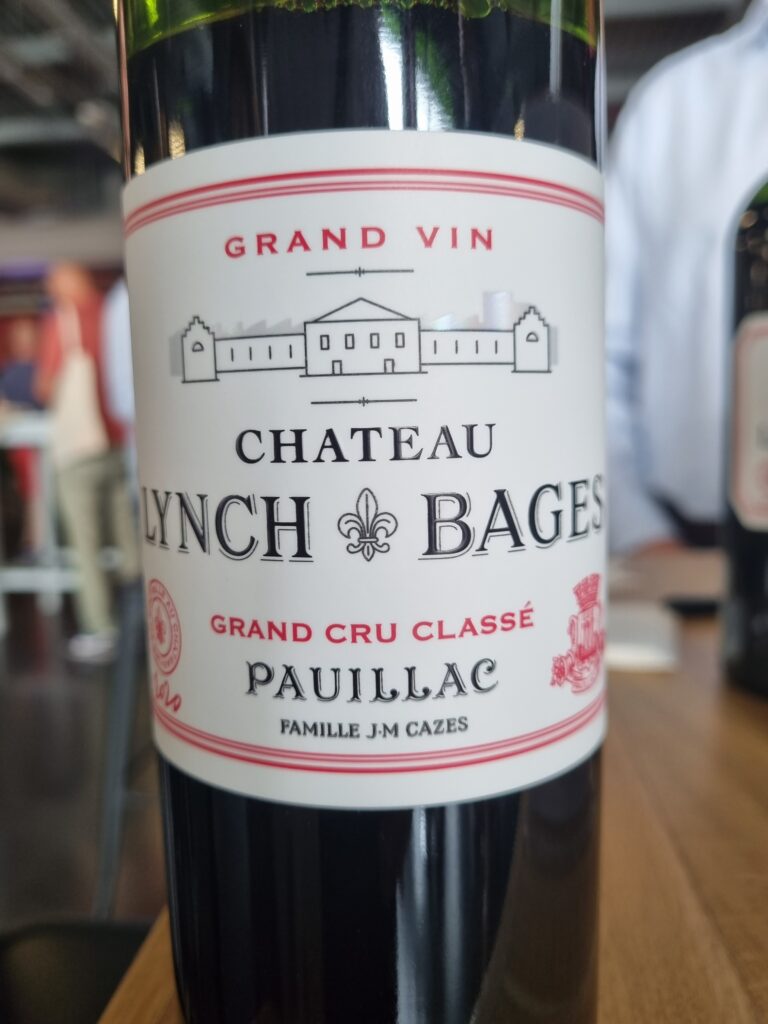
Lynch Bages (75% Cabernet Sauvignon, 19% Merlot, 4% Cabernet Franc, and 2% Petit Verdot)
N: Fine, rich, and subtle, but largely closed now.
P: Nice mouthful of wine with rich blackcurrant flavors. Great balance between fruit, acidity, and tannin. Some roast coffee aromatics. A little alcohol on finish. Will undoubtedly age well.

Lynch Moussas (83% Cabernet Sauvignon and 17% Merlot)
N: Some reduction smells. Aromas of oak and jam and a soupçon of mint. Lacks definition.
P: Medium-heavy mouth feel but falls down somewhat after the attack. Nevertheless, an authentic Pauillac with a tangy, slightly dry finish and good oak (although this must be kept from becoming overpowering in the coming months).  Good value for money.

Château Mouton Rothschild (84% Cabernet Sauvignon, 13% Merlot, and 3% Petit Verdot)
The bouquet is undefined and obviously too young. It is nevertheless ethereal, and promising. The wine is fresh, big, and sinewy on the palate with great blackcurrant flavors. Both tannin and fresh acidity – the hallmark of the 2016 vintage – spread out over the palate, working into a long, classic aftertaste with a velvety texture and cedar overtones. Bit dry on the finish. Mouton can be uneven, but this one is a real winner. It is a virile wine, on the massive side. Revisit a few decades from now.


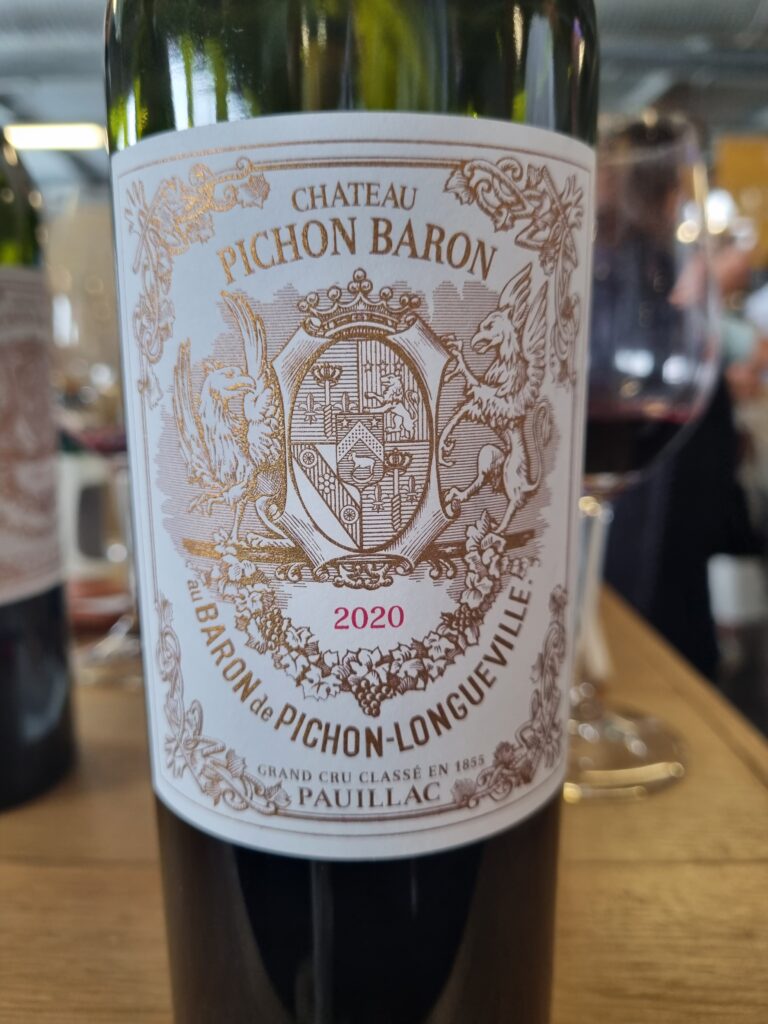
Pichon Baron (85% Cabernet Sauvignon and 15% Merlot)
N: Classy, brambly nose very typical of the estate with hints of fresh leather. Subdued only because very young.
P: Big with lovely tannin. Deep fruit and a certain earthiness. Refined and stately. Seems a little tough now, but just you wait! A superb Baron with tremendous ageing potential.
I usually don’t mention associated wines in these notes (2nd and 3rd wines, etc.), but 2016 Château Pibran AOC Pauillac really shone too.

Pichon Comtesse (75% Cabernet Sauvignon, 21% Merlot, and 4% Cabernet Franc)
N: Sweet, subtle lovely Médoc bouquet with sweet blueberry. Could be mistaken for a fine Margaux.
P: Perfectly round and rich on entry, going on to show great acidity (that coats the teeth), purity, restraint, and a velvety texture. Juicy, with a medium-heavy mouth feel and a great long aftertaste. A slight change in style.
I enjoy comparing Pichon Baron and Pichon Comtesse from the same vintage after a few years bottle age. The exercise with the 2016s should be absolutely fascinating because both are stellar!

Pontet Canet (60% Cabernet Sauvignon, 35% Merlot 4% Cabernet Franc, and 1% Petit Verdot)
N: Not together at this early stage, but there are spicy (cinnamon) notes to back up the incipient fruitiness.
P: Ah, the palate is more like it! The 2016 fresh acidity is there, along with a lovely, long aftertaste showing textured tannin and the estate’s pure mineral quality. Above and beyond the aforementioned freshness, the wine displays great tension and balance. Pontet Canet’s progression is confirmed.
The tasting notes don’t belong here, but Alfred Tesseron also had us taste wine from his new California estate, Pym-Rae (to be renamed Tesseron Vineyards). Located in Napa Valley’s Mount Veeder appellation that previously belonged to the late actor, Robyn Williams.

Saint-Estèphe
==========


Calon Ségur (56% Cabernet Sauvignon, 35% Merlot, 7% Cabernet Franc, and 2% Petit Verdot)
N: Fairly shut-in at this early stage, but enticing blueberry notes are starting to emerge.
P: Melts in the mouth. Appetizing. Tight-knit with lots of energy. Wonderful, fresh Médoc fruit. 100% new oak, but the wine can take it. Excellent tannin on finish. A great success. An estate going from strength to strength.
I must also mention the other vineyard they own in Saint-Estèphe (not the second wine, Marquis de Calon): Château Capbern, an absolute champion in terms of value for money!

Cos d’Estournel (76% Cabernet Sauvignon, 23% Merlot, and 1% Cabernet Franc)
N: Lovely barrel cellar bouquet along with blueberry and blackberry liqueur aromas.
P: Big volume on the palate. Soft and rich. Velvety texture and very long aftertaste. Considerable ageing potential. A toned-down modern style. Classy wine. The effect of ageing in new oak must nevertheless be followed closely.

Cos Labory (53% Cabernet Sauvignon, 44% Merlot, and 3% Petit Verdot)
N: Somewhat herbaceous, but sweet red fruit is lurking.
P: Tannin is a little tough and there is acidity in spades, but also a more modern and approachable side to this wine than in the past. The dryish finish features berry fruit and new oak.


Lafon Rochet (67% Cabernet Sauvignon, 25% Merlot, 6% Cabernet Franc, and 2% Petit Verdot)
N: A lovely mixture of graphite and black fruit with a few rustic notes.
P: Excellent mouth feel and texture. Sweet fruit and smoothness one has come to expect from this estate. Refined and has a bright future ahead of it.

Montrose (68% Cabernet Sauvignon, 25% Merlot, and 7% Cabernet Franc)
N: Gravitas. Deep and nuanced. Leather, butter, and vanilla accompany the blackcurrant aromas.
P: Quite imposing. Melts in the mouth and coats the palate. Concentrated. Fills out well and seems an ideal marriage between old and new styles. Blackcurrant galore with a suggestion of mint/eucalyptus. Impressive long aftertaste with a mineral aspect. Montrose is on a roll…

Saint Julien
========


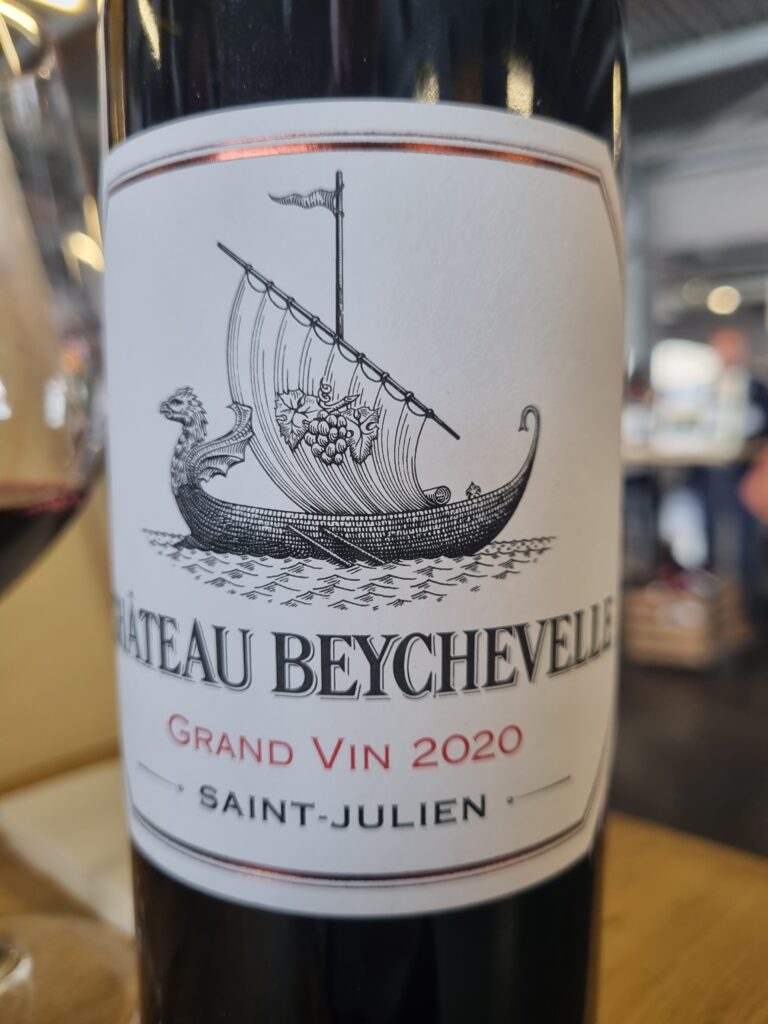
Beychevelle (47% Cabernet Sauvignon, 47% Merlot, 5% Petit Verdot, and 1% Cabernet Franc)
N: Lovely fresh nose of candied blackcurrant and crushed blackcurrant leaves along with mineral nuances.
P: Great Médoc berry fruit that develops beautifully on the palate. Round, well-focused, and classic with an attractive tartness and mineralty. There was a time when Beychevelle was ho-hum. Not any more, and it clearly punches above its classification. I just hope the oak integrates – as I think it will – to alleviate the slight dryness on the finish. Fine potential.
I visited Beychevelle’s new cellar afterward. This is as “state-of-the-art” as anywhere in the world and was built with esthetics in mind. There is plate glass everywhere with a beautiful view over Saint-Julien’s gravelly rises. Definitely worth a visit.


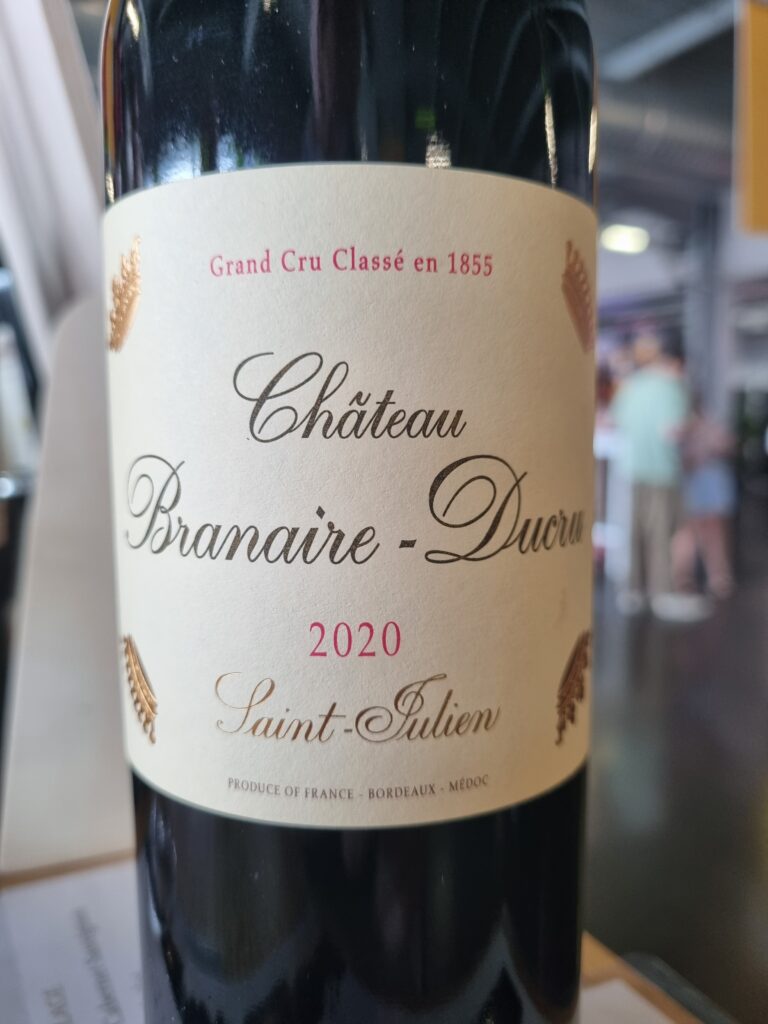
Branaire Ducru (64% Cabernet Sauvignon, 27% Merlot, 6% Petit Verdot, and 3% Cabernet Franc)
N: Classic sweet fruit with some chocolate and pencil shaving notes. A touch biscuity.
P: The balance on the nose is there on the palate as well, with rich, sleek tannin. Broad-based with attractive fruit and nice grip on the finish. As good as ever.

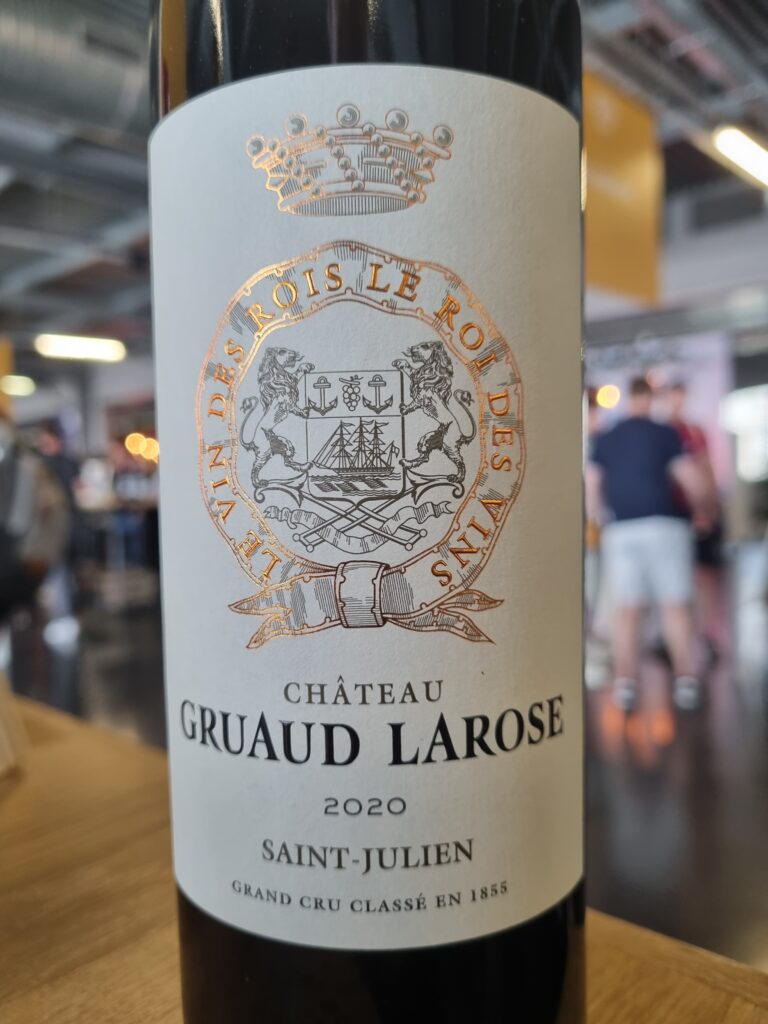
Gruaud Larose (61% Cabernet Sauvignon, 29% Merlot, 7% Cabernet Franc, and 3% Petit Verdot)
N: Blackberry liqueur and oak. A little musky.
P: Rich, compact, and refreshing although a tad weak on the middle palate. Cleary needs to digest the oak, but there is a good solid base of ripe fruit there waiting to emerge.


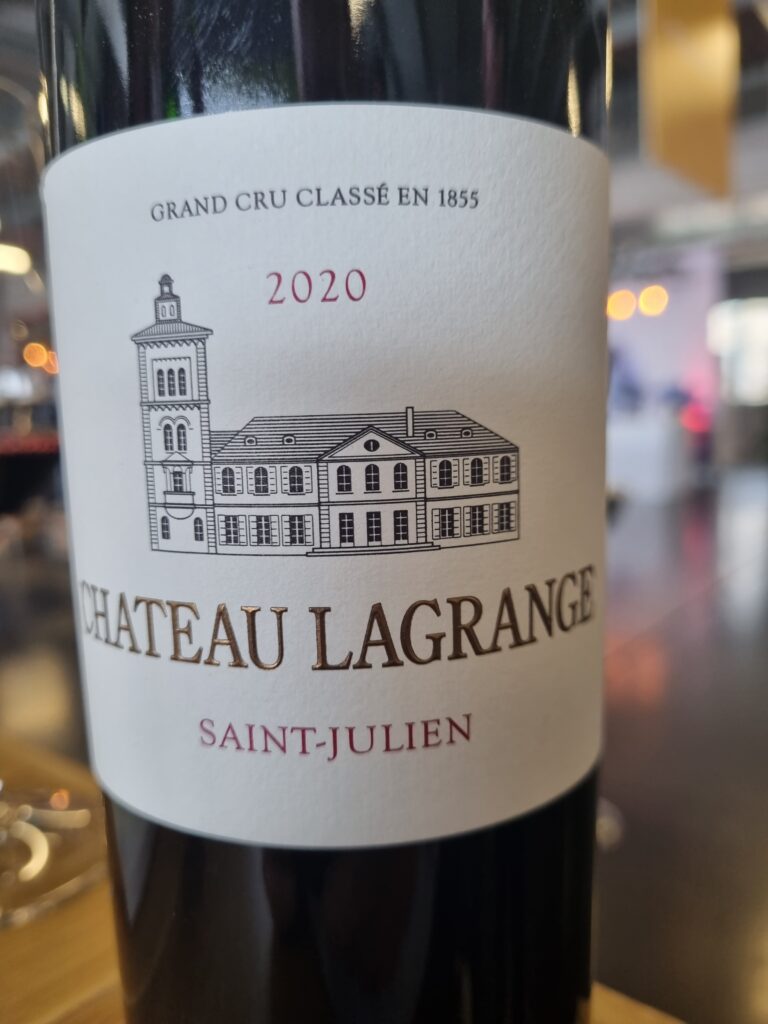
Lagrange (70% Cabernet Sauvignon, 24% Merlot, and 6% Petit Verdot)
N: Enticing, fresh, primary, and rich, with coffee and ethereal red and black fruit brandy aromas.
G: Soft, mouth-coating tannin for this sturdy wine with unmistakable Médoc fruit and a fairly long aftertaste that is a little dry at this point. A good effort from this reliable estate.

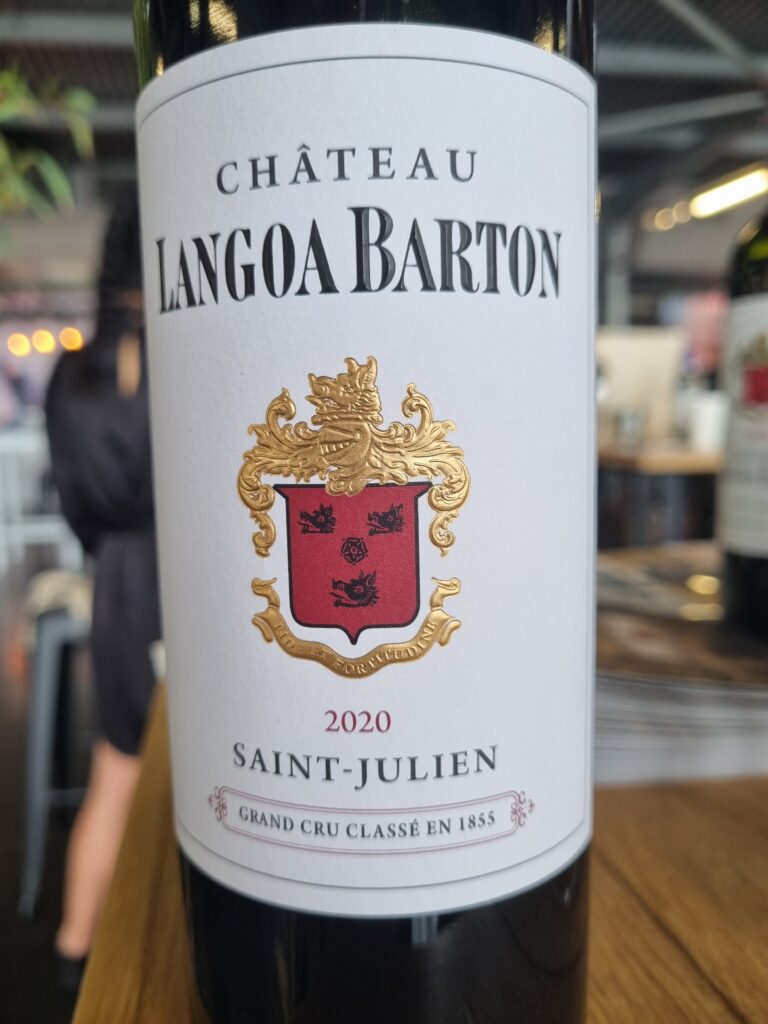
Langoa Barton (55% Cabernet Sauvignon, 37% Merlot, and 8% Cabernet Franc)
N: Somewhat subdued, but the trademark blackcurrant and graphite are just waiting to come through.
P: Fresh and focused with fine-grained tannin. Lively, easy-going, “fluid”, and will be enjoyable young or old. Good oak. Well-made. A pleasure.

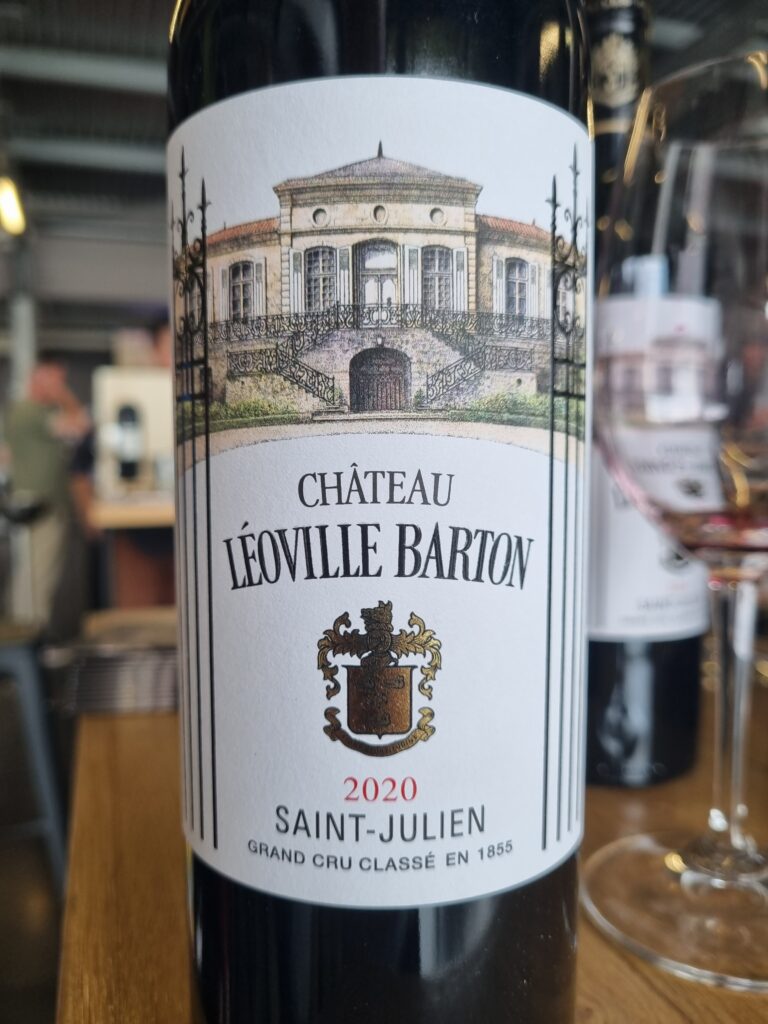
Léoville Barton (86% Cabernet Sauvignon and 14% Merlot)
N: Fruity, but lacks spark at this early stage.
P: Gorgeous velvety texture. Utter class. Seamless development. Top-quality tannin. Fruit needs to come through, but all the right signs are there. Very long aftertaste. Perhaps beats Léoville Poyferré by a nose.


Léoville Las Cases (75% Cabernet Sauvignon, 14% Merlot, and 11% Cabernet Franc)
N: Deep, dark blackberry and cassis fruit one would expect from Las Cases.
G: A big mouthful of wine with tons of fruit, mostly cherry at this stage. The volume and intensity are not overbearing and the wine is, as usual, in classic mode. Balance and terroir are the bywords here, because you would instinctively guess that stretch of land between Saint-Julien and Pauillac if tasted blind. An unquestionably fine vintage from this much-respected “super-second” growth.

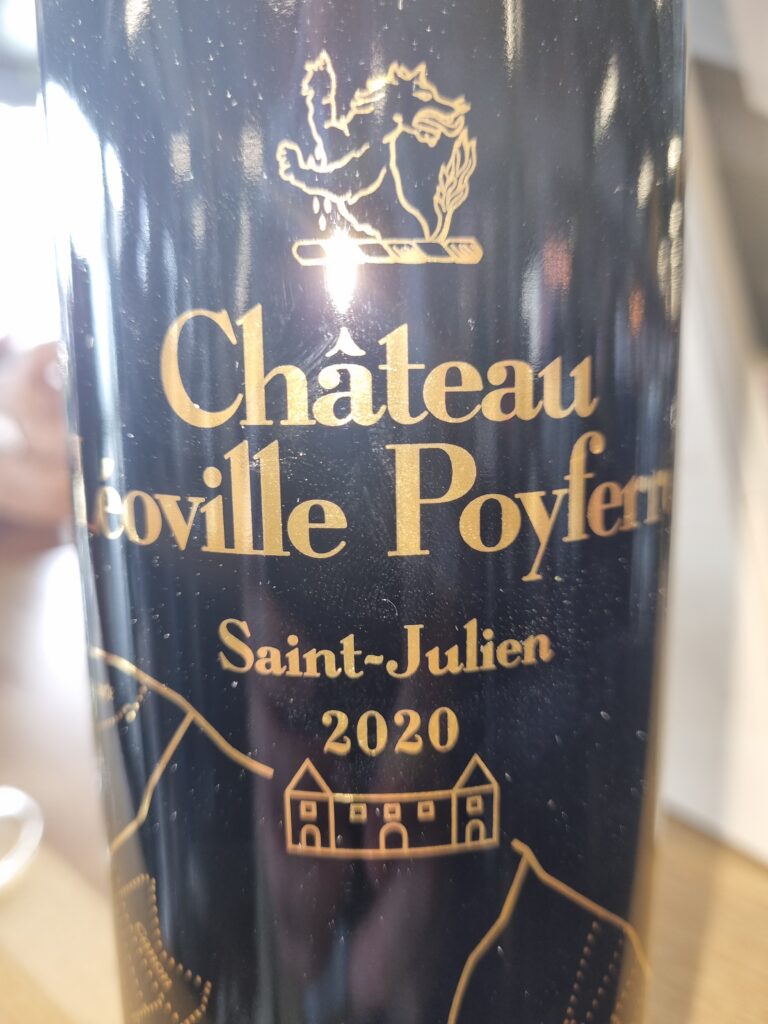
Léoville Poyferré (60% Cabernet Sauvignon, 33% Merlot, 5% Petit Verdot, and 2% Cabernet Franc)
N: Trademark bouquet of blackcurrant fruit along with fresh forest floor aroma and graphite. Oak is not obtrusive (neither is it on the palate).
P: Smooth, sensual mouth feel and lots of deep fruit working its way into a classic finish.  Seems almost syrupy at one point and then segues into minerality. Both big and refined.  More fruit forward and a touch less serious than Las Cases, but a great wine.

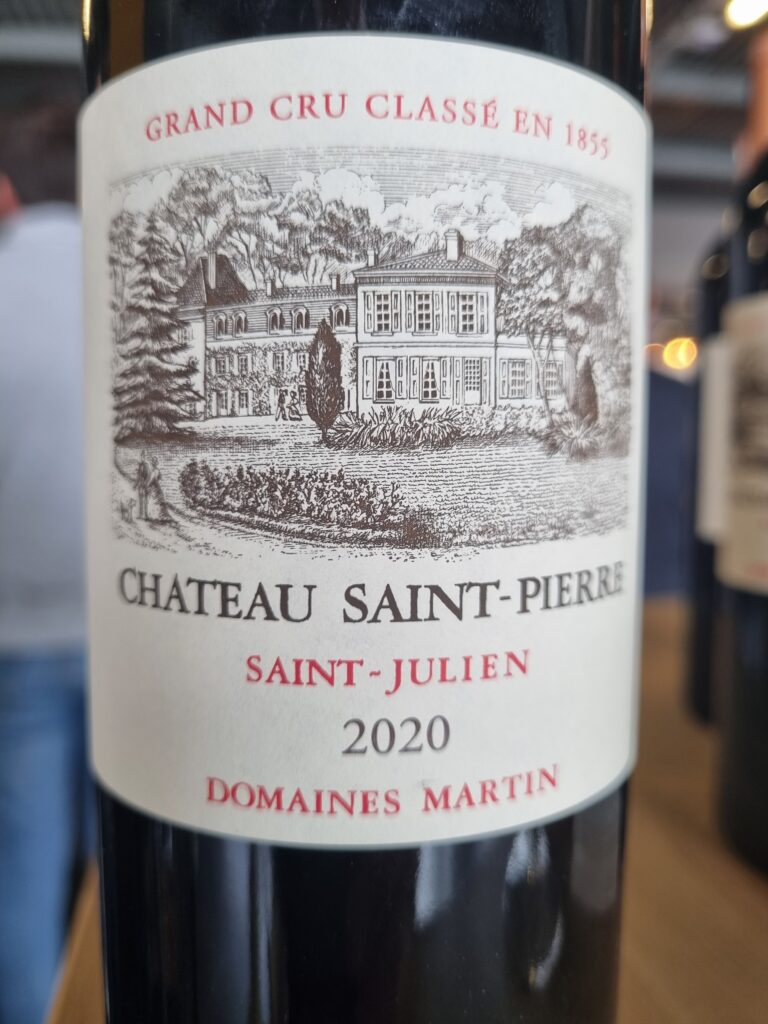
Saint Pierre (73% Cabernet Sauvignon, 21% Merlot, and 6% Cabernet Franc)
N: Open, sexy bouquet of violet, cassis, blueberry cedar, and graphite.
P: Round and melts in the mouth.  Maybe a little simplistic, but in keeping with the château’s fruity crowd-pleasing style. Will be delicious early on. Tangy finish that is a little dry now.

DSC03120
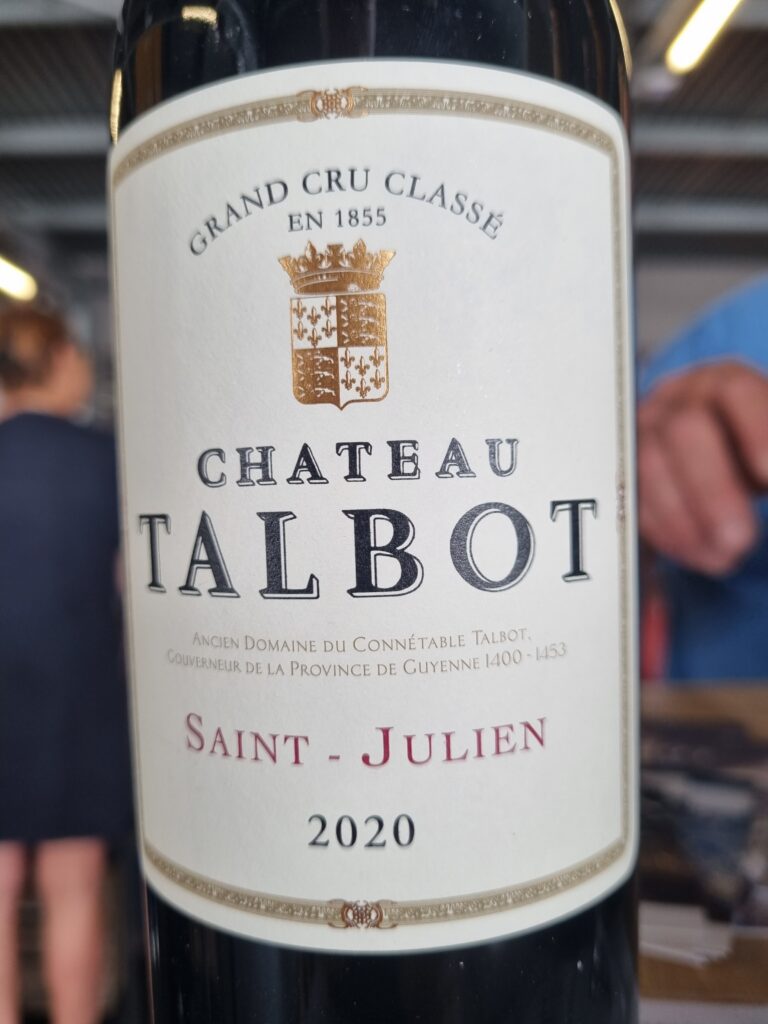
Talbot (55% Cabernet Sauvignon, 39% Merlot, and 6% Petit Verdot)
N: Very refined, subtle nose. Not a hair out of place. Subtle with some roast coffee overtones.
P: Big and chunky. A meaty textbook Cab. Mouthfilling. The aftertaste defines fine Médoc. Excellent quality tannin and good acidity for a long life.

2016 Haut-Médoc and Margaux (24 wines tasted)

Haut-Médoc appellation
=================

Château Beaumont (50% Cabernet Sauvignon, 47% Merlot, and 3% Petit Verdot)
N: Deep and sweet, if a little simple. A slightly dusty, biscuity element.
P: Soft and round. Moreish. Good medium-soft tannin, but there is nevertheless marked acidity. This is the sort of wine probably best enjoyed young and fruity.

Château Belgrave (69% Cabernet Sauvignon, 28% Merlot, and 3% Petit Verdot)
N: Wildberry aromas with a touch of grenness. Inky and funky.
P: Fresh and easy-to-drink. Up-front. Will also go well with food because of good grip.

Château Camensac (50% Cabernet Sauvignon and 50% Merlot)
N: Complex and slightly waxy. Mostly closed, but relatively promising.
P: Very soft and luscious on entry. Melts in the mouth. A really attractive early-drinking wine (5 years). Nippy with a nice little aftertaste. A bargain for people who drink wine rather than labels. This estate is coming up in the world.

Château Cantemerle (52% Cabernet Sauvignon, 39% Merlot, 5% Cabernet Franc, and 4% Petit Verdot)
N: Odd. Berry fruit there but also some unusual meaty aromas.
P: Brambly and better on the palate. Easy-going but fairly short. Best enjoyed young.

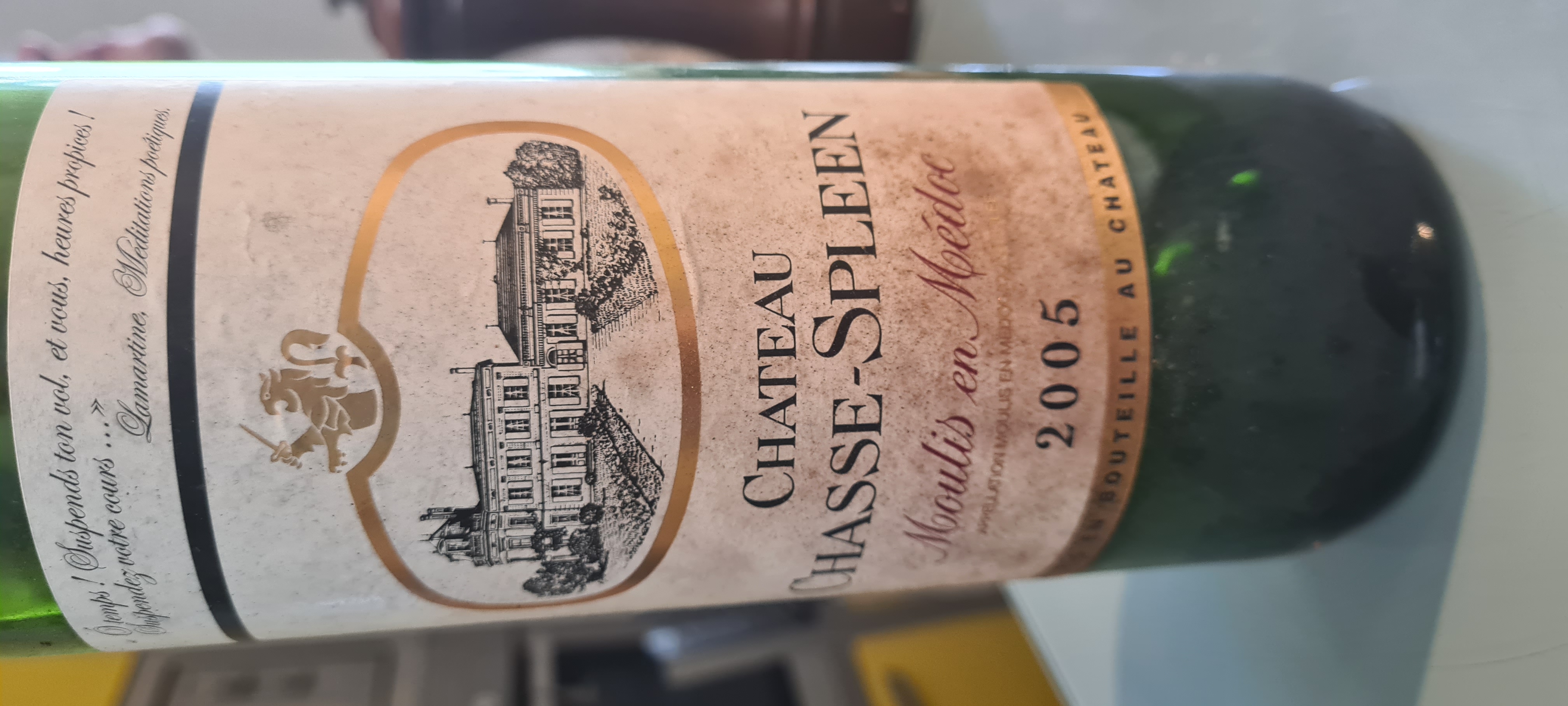
Château Chasse Spleen (50% Cabernet Sauvignon, 42% Merlot, and 3% Petit Verdot)
This was one of two wines from Moulis I tasted and, as the Union des Grands Crus did at Château Cantemerle, I have included it along with wines from the Haut-Médoc appellation.
N: Not very expressive at this point. Some cosmetic aromas.
P: Smooth, almost oily then goes straight into a tannic finish. Not the greatest balance but can, of course, improve over time.

Château La Lagune (% Cabernet Sauvignon, 13% Merlot, and 3% Petit Verdot)
N: Well-defined with good focus. Deep and ethereal. Pure cassis and candied black fruit along with raisins, red fruit, and understated roast coffee aromas
P: Broad-based and fairly long. Definitely Margaux-like. Medium weight with lovely fine-grained tannin. Good young or old. Oak in check. This is La Lagune’s first certifiably organic vintage, and a very successful one it is too.

Château Poujeaux (60% Cabernet Sauvignon, 35% Merlot, and 5% Petit Verdot)
This was one of two wines from Moulis I tasted and, as the Union des Grands Crus did at Château Cantemerle, I have included it along with wines from the Haut-Médoc appellation.
N: Subdued, but deep, with attractive cranberry aromas. Promising.
P: Lovely soft Médoc. Very well-made with high-quality tannin. The aftertaste spreads out beautifully. A wine for connoisseurs – and the budget-conscious.

Château La Tour Carnet (60% Merlot, 30% Cabernet Sauvignon, and 10% Petit Verdot)
N: Very New World with strong oaky aromas.
P: Chunky and mouth-filling. Hot and oaky. If this sample is anything to go by, not a success in 2016.

Margaux appellation
==============

Brane Cantenac (70% Cabernet Sauvignon, 27% Merlot, 2% Cabernet Franc, and 1% Carménère)
N: Fruity and oaky. Seems a little hollow at this juncture, but then comes out of its shell.
P: The Margaux magic operates with silky tannin and refreshing 2016 acidity. Not full-bodied, but well-balanced. Very good lingering aftertaste. The fruit and acidity mark the palate more than the tannin.

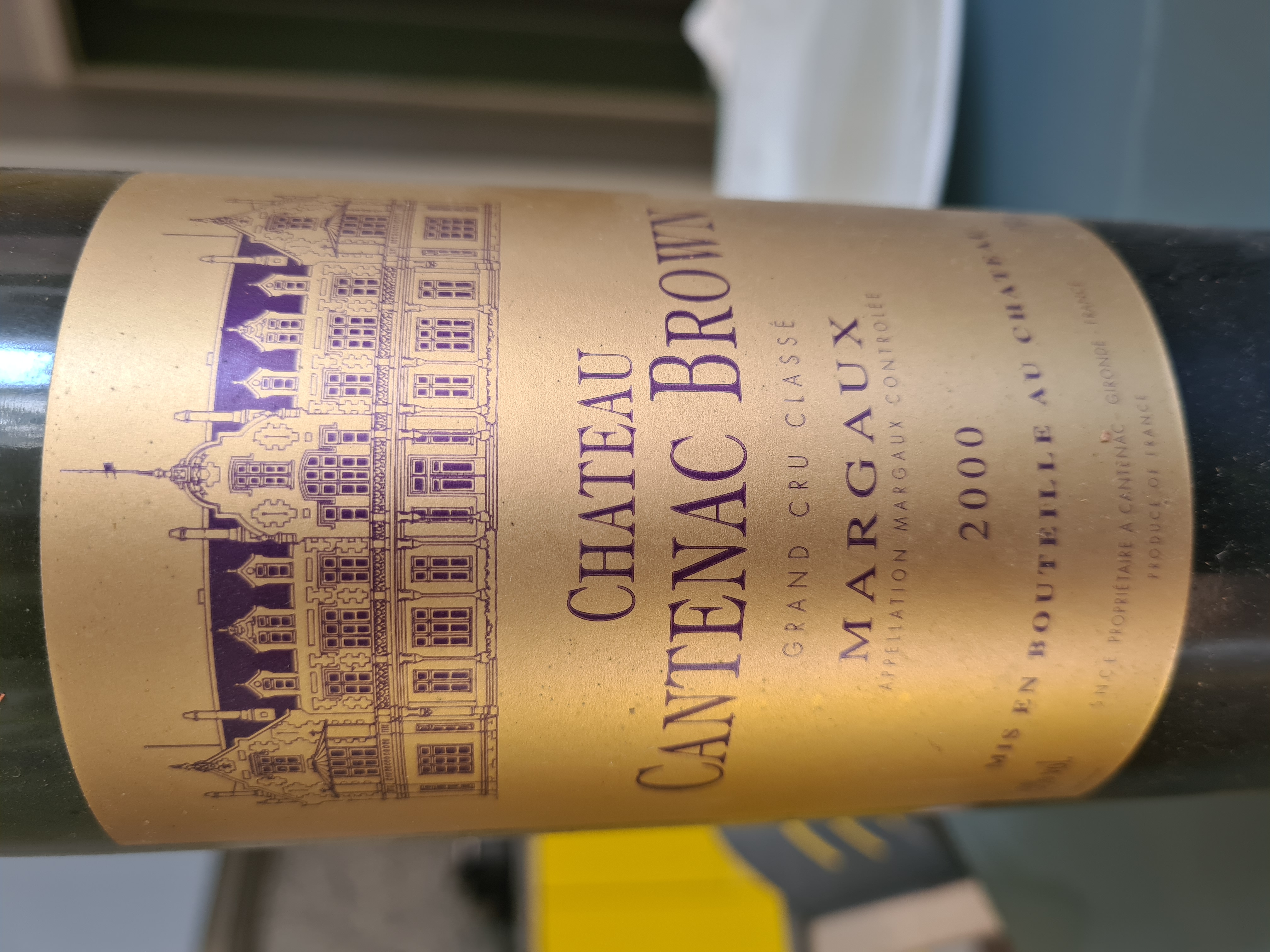
Cantenac Brown (68% Cabernet Sauvignon and 32% Merlot)
N: Non-descript (read: closed) at this stage, but there are ethereal kirsch aromas.
P: Surprisingly soft, then vivacious and refreshing. Worthwhile and interesting. Traditional-style Médoc with classic acidity.

Dauzac (71% Cabernet Sauvignon and 29% Merlot)
N: Broad, meaty, and jammy, with definite roast coffee and cherry lozenge notes. Fresh with good berry fruit and varietal Cabernet aromas.
P: Starts out rather chunky, then goes on to reveal good acidity. Tea flavors and a penetrating aftertaste of blackcurrant. A Margaux with attitude and a good Dauzac.

Desmirail (55% Merlot, 40% Cabernet Sauvignon, and 5% Petit Verdot)
N: Very toasty and roast coffee aromas at this stage. The fruit is hiding, waiting to come out.
P: Mercifully not too oaky on the palate and there’s good fruit there too, but care should be taken with the rest of barrel ageing. Good intensity and excellent grip. Made to last.

Ferrière (63% Cabernet Sauvignon, 33% Merlot, 3% Petit Verdot, and 1 % Cabernet Franc)
N: Soft and withdrawn. Sweet, and interesting with nuances of herbes de Provence,. Oak is toned down.
P: Svelte, velvety attack, then develops well on the palate with good acidity and fruit. Nicely-textured tannin. Classic and good with a touch of mintiness. Delicate structure and somewhat on the thin side, converging into a sharp finish.

Giscours (81% Cabernet Sauvignon and 19% Merlot)
N: Bit tanky but, looking behind this, there is a medium-deep bouquet of good berry fruit, some herbaceousness, and coffee-vanilla aromas.
P: Big, soft, and chunky on the palate, with fresh acidity. Blackcurrant flavors and a balance reminiscent of Saint Julien, although it finishes with the lean elegance of Margaux.

Kirwan (55% Cabernet Sauvignon, 33% Merlot, 8% Petit Verdot, and 4% Cabernet Franc)
N: Something a bit off here, with bretty, musky aromas.
P: Deep, foursquare, solid, and angular. Taut, persistent aftertaste and a dry finish. This wine is not showing well at the present time. Needs to be tasted at a later date

Lascombes (50% Cabernet Sauvignon, 47% Merlot, and 3% Petit Verdot)
N: Inky, berry, and mucilage aromas with graphite overtones.
P: Round, medium-heavy mouth feel. Dips on the middle palate, going on to show some harsh oak. Touch medicinal. Too much oak. Needs to age more to be correctly evaluated.

Malescot Saint-Exupéry (55% Cabernet Sauvignon, 37% Merlot, 6% Cabernet Franc, and 2% Petit Verdot)
N: Fresh and pure, but bit simplistic at this time. Nevertheless deep and promising.
P: Lovely resonance and great follow-through. Vibrant and delicious. Not big, but balanced. Bright Cabernet fruit. Fine textured aftertaste. A definite success in 2016.

Margaux: please refer to the previous separate post.

Marquis de Terme (60% Cabernet Sauvignon, 35% Merlot, and 5% Petit Verdot)
N: Fine, complex, understated bouquet showing primary fruit with plenty of blackcurrant as well as more unusual spicy aromas (cinnamon).
P: Sophisticated attack, then shows good fruit, but is a bit hard and oaky. Care should be taken during the rest of ageing that this does not get the upper hand. A class act.

Palmer (47% Cabernet Sauvignon, 47% Merlot, and 6% Petit Verdot)
N: Sweet, but rather one-dimensional at this stage. Some briary and jammy notes. Not the ideal time for the bouquet to be evaluated.
G: Much more expressive on the palate. Big, round, full, and chewy, but the bracing freshness avoids any possible confusion with wines from the New World. Tight, concentrated, and gummy on the finish, which is also a bit dry. Good acidity to the point where you feel it on your teeth. Needs to be tamed by barrela ageing and, of course, years in bottle.

Prieuré-Lichine (69% Cabernet Sauvignon, 26% Merlot, and 5% Cabernet Franc)
N: Fragrant, subtly cosmetic nose with hints of subtle berry fruit and oak that is under control.
P: Sprightly. Good and rich, but with marked acidity. Tremendously fresh. Very typical of its appellation. Round and firm, then that fresh acidity chimes in. Good structure and balance. An estate to watch.

Rauzan-Gassies (78% Cabernet Sauvignon and  Cabernet Sauvignon and 22% Merlot)
N: Fresh and fruity, almost as though there were no oak influence at all. Subtle with some chocolate nuances.
P: Starts off soft, seems as though it will be simple, and then bursts with fruit and personality. Rich and satisfying. Medium-heavy mouth feel. Long textured aftertaste. Restores my faith in this chronically underperforming wine, and is the best I’ve ever had from the estate.

Rauzan-Ségla (68% Cabernet Sauvignon, 30% Merlot, and 2% Cabernet Franc)
N: Decidedly herbaceous, but there is also bright Cabernet fruit too, along with some violet aromas. Soft and nice, but lacks oomph. Aeration, however, could change that markedly.
P: Elegant. Starts out rather full-bodied then shows good acidity, finely-textured tannin, and tea-like nuances. Rather old-fashioned in style (not a criticism). Classic and restrained, with blackcurrant fruit not far under the surface… Slightly dry, but that can easily change.

du Tertre (75% Cabernet Sauvignon, 10% Merlot, 10% Cabernet Franc, and 5% Petit Verdot)
N: Roast coffee, dark fruit, and a not unpleasant greenness.
P: Fruity, smooth, and medium-light in body. Candied black fruit flavors. Will be drinkable and enjoyable young.

2016 Château Lafite Rothschild

Lafite Rothschild

2016 Duhart Milon (67% Cabernet Sauvignon, 33% Merlot)
They always serve 4th growth Durhart Milon before the second wine of Lafite. Does that mean that it is less serious? No, but it is definitely lighter in body. The nose of the 2016 is soft, ethereal, reserved, and aristocratic with telltale pencil shaving aromas. The wine starts out with a very smooth, caressing mouth feel and goes on to show refined understated fruit. It is more elegant than powerful, and lacks richness. Medium-long fresh aftertaste with plush textured tannin.

2016 Carruades de Lafite (49% Merlot, 44% Cabernet Sauvignon, 5% Cabernet Franc, 2% Petit Verdot)
The nose is a little disappointing here, with some astonishing asparagus and bamboo shoot/Chinese vegetable notes! These dissipate somewhat with aeration, but the bouquet is not flattering at this stage. The wine is much better on the palate and fills out with a classy satiny texture and medium body. There is clearly good acidity on the finish, so it will undoubtedly age well, but will always remain on the delicate side.

2016 Lafite Rothschild (92% Cabernet Sauvignon, 8% Merlot)
Lovely trademark Lafite nose words cannot aptly describe. Suffice it to say that it is deep and subtle with an unmistakable violet element as well as muted graphite and coffee aromas. The wine has a gorgeous texture on the palate with the guts to back up the tremendous elegance. The aftertaste is deliciously long and aromatic. Check back in 2050! This Lafite proves that the best wines of the vintage, thanks to a streak of lively fresh acidity, have what it takes to age, as well as a unique balance between fruit, tannin, and acidity. This Lafite was one of the best wines I tasted all week. It’s nice not to be disappointed!

Vertical tasting of Château La Conseillante at Max Wine Gallery


What is Max Wine Wine Gallery and Cellar?


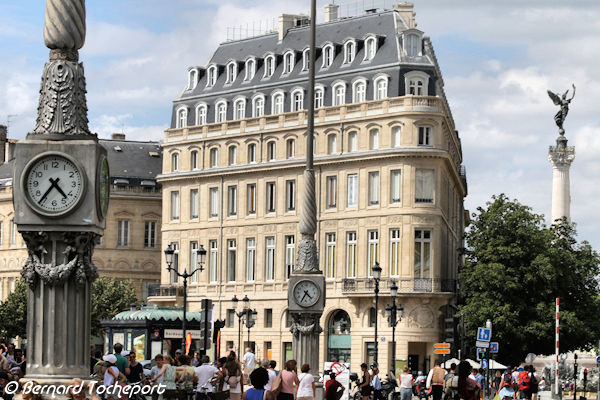
Housed in a splendid town house in the center of Bordeaux, a stone’s throw from the Grand Théâtre, (14 Cours de l’Intendance), Max Wine was opened in 2009 by a Norweigan wine merchant, Henning Thoresen.  It features several Enomatic dispensing machines with inert gas to preserve the freshness of the 48 wines available at any one time – up to and including 1st growths – in 2.5, 5, or 7.5 cl pours.

Customers buy a magnetic card credited with the amount of their choice and taste what they want, how much they want, and at their own pace.

Max Wine Gallery also has a boutique and offers tasting workshops. I went to one of these on the 8th of December focusing on Château La Conseillante.

There is no need to do a mini château profile here. That is easy enough to find on the Web. Let it suffice to say that La Conseillante has a proven track record and is unquestionably one of the top ten wines in a very small, prestigious – and expensive – appellation.

The estate and wines were presented by Elodie Emonet, in charge of communication and public relations.


We started off with two vintages of the second wine, Duo de La Conseillante.
The 2013 had a good color with a purplish rim. The nose was bright, simple, and plummy (damson) with cherry overtones. However, the overall bouquet was one-dimensional. The wine was round and slightly dilute on the palate – a lightish thirst-quenching sort of wine that is ready to drink as of now. There are the rubbery tell-tale Pomerol tannins there and a slight gamey touch, as well as a hint of greenness. Fortunately, the winemaker took vintage character into account and the oak is not overpowering. This reminded me of a sort of luxury version of Saumur-Champigny. A decent enough wine, but the question of value for money comes into play here. 13.5/20
The 2009 Duo was a different kettle of fish. The wine had a lovely color with a deep core, although it was not particularly brilliant. It is just starting to brick on the rim and looked a little older than its age. The nose was very beguiling with fine-tuned oak, as well as earthy, truffle aromas. A lovely feminine bouquet. The wine was rich and fairly round on the palate with a velvety texture and a taste of candied black fruit. Very seductive. Medium-long, sprightly, fresh aftertaste. Superb second wine. 15/20. I believe this retails for about 60 euros and at that price is definitely worth the money.

Next up were three vintages of the grand vin, Château La Conseillante.

20161208_205238

Curiously, we started out with the oldest. I can understand the reasoning, that younger wines might overwhelm a subtle aged vintage. However, I am very conservative here and prefer the opposite order. Be that as it may, we started off with the 1996. At twenty years old this was looking its age, and then some with graduated mahogany overtones. The indescribable (but one tries to describe anyway…) nose featured deep cherry aromas along with leather, forest floor, cherry, and empyreumatic* overtones. It was lovely, understated and sweet, but too indeterminate and not fresh enough. This impression of tiredness carried over to the palate, where the wine was curiously light, but balanced and clearly displayed plenty of class. There was marked acidity here. The tannin will undoubtedly outlive the fruit, which has already started to go. Slightly disappointing for this great wine from a good vintage. 16/20
*empyreumatic: This long, fairly pretentious word is nevertheless very useful to describe certain smells, especially in aged Merlot-based wine. The dictionary defines it as “being or having an odor of burnt organic matter as a result of decomposition at high temperatures <creosote and other empyreumatic oils>” and the word does exist in English. I use it when describing “burnt rubber” aromas, and it is not meant to be negative. If anyone has a better “Anglo-Saxon” word for this, I’d be very grateful to know!


20161208_202950

The 2006 was very different, and probably reflects a more modern approach to winemaking as well as its relative youth. The color was a little lackluster with a very deep core and just starting to show some age on the rim. There was definite black truffle on the nose along with subtle floral aromas and sweet fruit. The understated vanilla/almond nuances were very attractive. However, the overall impression is underdeveloped at this stage. The wine was powerful and mouth-coating on the palate, but stops a little short on the aftertaste. The tea-type tannin was velvety – great texture! Fruit paste nuances add a nice touch. Elodie from La Conseillante said this wine is to drink now or to age. I disagree. I think it needs much more time to strut its stuff. 16/20 now, probably more later. I have a bottle in the cellar and will give it another 7 years or so.

20161208_205322

Last up was the 2010. The color was a little dull, but very dark purplish-red and the wine left thick legs on the glass. There was some reduction on the nose with biscuity aromas, a soupçon of mint, and lots of vigorous primary fruit. There were also complex floral and cosmetic hints. Very elegant, but obviously too young. The wine coats the palate on entry and there was some exotic spiciness there, but also a marked alcoholic presence. However, this alcohol is encased in a soft shell. I had the feeling that the wine was not in such a very good place now, but it shows tremendous potential. There was a lovely creamy sensation and a sexy follow-through with enticing blueberry flavors. Superb tannin, with a rubbery quality (once again, this is not meant to be a criticism). There’s definite magic there. 17/20


A dozen 2014 red Graves


In the same way as there is a basic misunderstanding of what the word “Bordeaux” means in English-speaking countries (where it is often equated with the expensive tip of the pyramid), the name “Graves” makes many people think only of the region’s great growths – all of which are located in a sub-appellation of the Graves, Pessac-Léognan, created in 1987. To confuse matters, these famous châteaux continue to be called crus classés de Graves rather than Pessac-Léognan…

This northern part of the region (1,500 hectares for Pessac-Léognan compared to 3,500 for the rest of the Graves) is also referred to as Les Graves de Bordeaux since it starts just outside the city. In fact, Bordeaux is actually IN the Graves, and until recently there were actually one or two wine producing estates within the city limits!

Many Anglo-Saxon consumers also think of white wine when they think of Graves. However, the 43 communes in the appellation produce 70% red wine…


I was invited to an awards ceremony, the Trophée des Grands Crus de Graves, on November 16th at Château de Portets. On this occasion there were about 40 red wines to taste and perhaps 30 white wines. The room was rather crowded and tasting conditions not ideal, but here are my notes for a dozen red wines.

These were all from the 2014 vintage.

The overall level was quite good and none of the wines were expensive. Furthermore, almost all of them were showing well just two years after the vintage and will be drinking well quite young.

IMPORTANT: Please consider the points within the following context. I am a tough grader. For me, acceptable wine is 10/20, 12/20 is OK, 14 is quite good, and 15 on up is special.
Also, obviously, we are also talking about wines that cost only a fraction of the grands crus.


2014 Château Saint Robert
Color: medium light and very purplish
Nose: fresh, natural, not messed-about-with, and showing uncomplicated red fruit aromas with some candied fruit
Palate: fluid to the point of being a little dilute with vanilla and caramel overtones from oak. Already drinking well. A good commercial style, but with a short finish.
14/20

2014 Château de Portets
Color: not very deep, but brilliant and attractive
Nose: black fruit, especially blackberry. Lacking in concentration. Pure and sweet but not confected.
Palate: Starts out round, mouthfilling, and sensual, but then drops before picking up again on the finish, which features round, slick tannin. Juicy, simple, and delicious for early drinking.
14/20

2014 Château de Castres
Color: youthful, not deep, and not perfectly limpid
Nose: off, acetic acid?
Palate: the round, simple, easy-going side damaged by searing acidity. Not rated. Not successful, but would be drinkable with food.


2014 Vieux Château Gaubert
Color: deeper than most of the wines, quite nice
Nose: good cherry aromas overlaid, but not overwhelmed by oak. Simple, but classy.
Palate: Big and chewy. Melts in the mouth. A wine that seems more well-made than a vin de terroir, but quite elegant. The only flaw is the short aftertaste.
14/20

2014 Château Chantegrive
Color: good, looking a little older than its age
Nose: strong toasty oak and blackberry fruit. Modern and vital.
Palate: Plenty of volume and quite round, but hollow on the middle-palate and fairly oaky. This oak influence is too great for the wine’s intrinsic structure.
13/20

2014 Grand Enclos du Château de Cérons
Color: medium deep and not very brilliant
Nose: some jammy fruit and brambly aromas. Subtle, but lacking in character.
Palate: Juicy, old-fashioned type of wine. Short and simple.
12/20


2014 Château Lassalle
Color: lovely and deep
Nose: delicate balance between fruit and oak.
Palate: suave, fluid, and typical of its appellation. Classic and understated. Maybe a little dry on the aftertaste, but very nice indeed. Suitable for fine cuisine.
14/20

2014 Château d’Uza
Color: deep and fine
Nose: bright upfront berry fruit and attractive oak that is not overdone
Palate: round, delicious, and strangely Pinot-like! Shortish finish and in a non-traditional style, but sexy.
14.5/20

2014 Château Lagrange
Color: medium-deep
Nose: smoky Graves aromas and fresh fruitiness, but not much substance
Palate: sharp, angular, and somewhat bitter. These qualities will not disappear with age. Tough (rather than rustic) tannin.
10/20

2014 Château Jouvente
Color: purplish-red
Nose: ethereal, but too understated.
Palate: very soft cushioned attack, then sinks into a hole, then rebounds with an aftertaste that a bit too hard compared with the wine’s overall feminine profile.
11/20

2014 Château de Landiras
Color: little cloudy and not very deep
Nose: seemed wimpish, but there’s some subtle blackberry fruit lurking there and a faint sweetness that might become more expressive with aeration (the bottles were uncorked and served).
Palate: foursquare but somewhat weak on the middle palate. OK, but lacks depth and length.
11/20

2014 Château de Lionne
Color: good, medium-dark
Nose: musty with camphor and minty notes making this more odd than attractive
Palate: some leather and black fruit, but in minor mode. Honest, but unremarkable and short.
11/20

Yes, it is possible to visit 16 châteaux in Sauternes in one day!

sauternes_bienvenue

My friend, Suzanne Mustacich (journalist for the Wine Spectator and author of “The Thir sty Dragon”, a book about the Chinese market for Bordeaux) and I participated in the Portes Ouvertes on the 11th of November 2016.
Fifty-four châteaux opened their cellars to the general public for three days.
I have made some amazing discoveries on such occasions and met some fine people, so I frequently take advantage of the Portes Ouvertes.
A veteran of these “Open Days”, I know from experience that it is always better to go on the first day when there are fewer people.

So, we set off on a public holiday (Armistice Day) and began our visits shortly after 10 am. Our game plan was simple: to taste at a maximum number of châteaux without going on any tours. Why no tours? Simply because these go over much of the same ground and, to be honest, one cellar tends to look a great deal like another one…

Sadly, Sauternes is a wine that has been losing ground of late. The French market is anemic and people rarely serve it now as an aperitif – a traditional practice that always surprises and/or shocks English speakers. That means that Sauternes is currently considered in far too restrictive a way, as a wine to serve with foie gras during the Christmas season…
Furthermore, sweet foods (and drinks) do not have good press at the moment and many Sauternes are perceived as too thick and weighty. The appellation has an ageing consumer base and most producers do not have other types of wines (dry white, red) to fall back on.
The price of vineyard land has plummeted, and many estates are for sale.
Something has to be done, but what? Some estates are producing a lighter style of Sauternes and a cooperative is being created. The average vineyard holding in Sauternes is less than 3 hectares, so this will lead to improved technological capabilities and economies of scale. More controversially, some producers, such as Clos des Lunes, are making just dry white wines and are seeking to create a new appellation such as Coteaux Sauternais for them.

Anyway, here’s the rundown of our day. Obviously, it is not possible to do any sort of in-depth report with so many estates, so please think of this as a sort of road trip.
The Sauternes appellation covers 5 communes: Sauternes, Preignac, Fargues, Bommes and Barsac.
Barsac has its own separate appellation, but can also be sold under the name Sauternes. The choice is up to the producer.

Our first visit was to second growth Filhot, in the commune of Sauternes – a magnificent château in a beautiful setting. We tried their 2013 Zest, a light easy-drinking wine with zippy packaging and an attractive price. This was followed by 2011 Filhot, which made a good impression. I bought a bottle of each.

Our next stop was at first growth Château Guiraud, also in Sauternes, one of the appellation’s leading producers. While we were not particularly impressed with the 2013 second wine (Le Petit Guiraud), the 2003 grand vin was aromatic, silky, and not as big and fat as one might expect. We had a long chat with Xavier Planty, who is also president of the local winegrowers association. He talked to us about the issues facing Sauternes at the present time as well as Guiraud’s organic winegrowing methods.


We went on to nearby Château Lafon (commune of Sauternes). While the wines were relatively inexpensive, they did not leave a lasting impression. We went from there to Château Raymond-Lafon (Sauternes) an estate well-known in the US. Although not classified, Raymond-Lafon is frequently considered on a par with the grands crus. We tasted the 1998 and 2009 vintages, starting with the older wine. This was rich, sensual, and long, but perhaps past its best. The 2009 was unsurprisingly more vital. The nose could have been more expressive, but the wine was lovely on the palate with a fine aftertaste.


Before lunch, we stopped at two premiers crus, both in the commune of Bommes: Sigalas-Rabaud and Rabaud Promis. Once forming a single estate, the wines have a very different flavour profile.

At Sigalas-Rabaud, we tasted the 2014 dry wine, La Demoiselle de Sigalas, as well as the second wine, the 2011 Lieutenant de Sigalas. Both of these were good, if unremarkable. However the 2007 grand vin was very elegant. The owner, Laure de Lambert Compeyrot, seemed pleased when I called her wine “ethereal”. “That’s what we’re aiming for”, she said.
Rabaud-Promis, on the other hand was foursquare, quite rich, and sweet. We tasted their second wine, Raymond-Louis, from 2013, which was rather cloying. The 2010 grand vin once again showed great richness, but had better balance, as well as subtle peach and apricot flavors. I bought a bottle. Just think: a 6 year-old first growth Sauternes from a fine vintage for under 25 euros a bottle. Sauternes can be tremendous value for money, especially when you consider their low yields and how far a bottle goes compared to a dry white or red wine.

Lunch was at the Auberge des Vignes in the heart of the thriving metropolis of Sauternes (population: 762). This traditional small restaurant specializes in meats cooked over vine cuttings. To save time in order to see a maximum number of estates, we had just one dish: entrecôte frites. This was delicious, reasonably priced (18 euros), and served quickly despite the fact that every table was taken.


6158851

We continued our pilgrimage with a stop at first growth Château Rayne Vigneau in Bommes. This was acquired just over a year ago by Franco-American businessman Derek Rémy Smith. We sampled 2010 Madame de Rayne, the second wine, which was a bit simple and syrupy, and then the 2010 grand vin. The latter was much better, with subtle aromas of pineapple, ginger, etc. and a much longer aftertaste.

I have been a follower of Clos Haut-Peyraguey, another first growth in Bommes, for years because it was hugely reliable and not very well-known – and therefore not very expensive. The estate was purchased by Bernard Margrez in 2012 and I have only had the wine once since then. We started off tasting the second wine, 2013 Sypmphonie. This was balanced and soft, but lacked oomph. It reminded me more of a Sainte-Croix-du-Mont or a Loupiac.  We went on to try the 2014 grand vin. This had an interesting tropical fruit bouquet and good acidity on the palate. Unfortunately the sweet, luscious attack retreated into a shortish finish not up to first growth level.


haut-bergeron-2011-770x10261

We next had a brief interlude at Domaine de Carbonnieux (Bommes). The wines there were very inexpensive, but unfortunately unworthy of special attention. It was a different story at the next estate, one of my favorite Sauternes, Château Haut Bergeron in Preignac. The Lamothe family have been making delicious wines there for many years. These are also good quite young and the second wine, Château Fontbride is nearly as flavorsome. We tasted the 2013 and 2011 vintages of the grand vin. I came away with 2 bottles of the 2010 and even bought 6 half-bottles of the 2015 en primeur.


We went from Haut Bergeron to Château Laville, also in Preignac. We enjoyed the 2011, but this estate also makes ones of the most weird and wonderful wines in Bordeaux, a late-harvest botrtyized blend of Riesling and Gewurtztraminer grown in the Sauternes appellation! I had picked up a few bottles last year and was anxious to come back for more. There can be no better wine for blind tastings. Who could ever guess its origin? Of course, it is sold as “vin de France” instead of Sautenes, but it’s a very fun and fascinating wine.

Stepping back in time, we went to Château d’Armajan des Ormes, located practically in the center of Preignac. The imposing and ancient château was largely rebuilt in the late 17th century. It belongs to the Perromat family, who also have large vineyard holdings elsewhere in Bordeaux. We compared the 2013 second wine (Ch. Le Juge) and the grand vin from the same year. These were old-fashioned in style and not especially noteworthy.

The next visit was to Château d’Anna in Barsac, a tiny 2-hectare estate with a correspondingly tiny cellar located. When I say tiny, the room where the barrels are kept and bottles stored must be all of 16 square meters! The wine is made by Xavier Dauba, cellarmaster at the Grand Enclos du Château de Cérons. 2011 Ch. d’Anna had a noticeably amber, coppery color and a rich ripe bouquet. The wine melts in the mouth with a strong botrytis character. An interesting, rare wine somewhat on the heavy side.

Resembling Château d’Armajan des Ormes architecturally, Château de Myrat in Barsac is an impressive structure. Second growth Myrat belongs to the venerable De Pontac family, who once owned Haut-Brion. We had a chat with Xavier de Pontac and admired his collection of pheasants and peacocks. We also tasted three vintages of his wine: 2012, 2010, and 2001. These were very Barsac in style: not as heavy as many of the Sauternes and with marked minerality on the finish. The 2010 featured fresh cutting acidity and the 2001 was interesting, but too old.

We then drove to second growth Doisy-Daënes, also in Barsac. This is the fief of the Dubourdieu family. Denis Dubourdieu, Dean of the Faculty of Enology and one of the great figures in Bordeaux, passed away this year and is greatly missed. The family’s complete range of wines was on show, but we focused on the Barsacs, enjoying the 2013 Doisy-Daëne (a good wine from a challenging year) and the surprisingly successful and youthful 1991 (Robert Parker gives one of his all-time low vintage ratings for 91 Sauternes: 70/100). The latter had a bouquet of crème brûlée and was also reminiscent of a Tokaj. It had a lovely long finish.

Our sixteenth (!) and last stop was just across the road at Château Gravas. I can hardly be objective here because I have known Florence and Michel Bernard for a couple of decades. This last visit was more of a social one, with a tasting of the light, but attractive 2013. The Bernards have a long tradition of welcoming visitors and they were thronged. There was a joyous atmosphere and this was a great way to end a busy, but fun and enlightening day.


A tasting of 17 wines from the Côtes de Castillon


dsc02936
I was invited to a tasting on the 9th of November by the Castillon Winegrowers Association.

I have a soft spot for Castillon. It’s one of those under-rated Bordeaux appellations that’s a treasure trove of good value wines.

There were about 20 of us at the tasting that started off with a short presentation by Maïwenn Brabant. She outlined some of the appellation’s marketing efforts including one that I found particularly interesting: Castillon winegrowers will go to people’s houses free of charge for groups of at least 10 people to share their wines and talk about them. Winegrowers have even done this in Paris, all at their own expense.
With that kind of motivation and effort, they can help but succeed!

Here are my notes.

IMPORTANT: Please consider the points within the following context. I am a tough grader. For me, acceptable wine is 10/20, 12/20 is OK, 14 is quite good, and 15 on up is special.
Also, obviously, we are talking about wines that cost only a fraction of the grands crus.


2012 Château Peyrou
Medium deep color. Not very expressive red fruit nose. Round, fruity, and juicy on the palate. Nice to drink at the present time. Uncomplicated and immediately appealing. Very Merlot: soft, with a rubbery finish. Good mid-range Bordeaux.
14/20

2011 Domaine La Tuque Bel-Air
Fine even color. Nose of candied fruit, liquorice, celery, and cocoa. Plush and round on the palate, but with a good tannic backbone. Plenty of black cherry fruit and a medium-long aftertaste. Great value. On retasting, I found a rustic aspect, but this is a good sign to me – that this is a vin de terroir.
15/20

2011 Château Pillebois
Nice color with a deep core. Suave bouquet. The oak overwhelms the fruit, but not in an unacceptably heavy-handed way. The wine has a brawny framework, but a hollow middle palate. Oak ageing dominates the flavor profile, but there is also brambly fruit. Finishes slightly dry.
13/20


2012 Château La Brande
Medium-deep color with youthful purple rim. Subtly perfumed nose but ash aromas in the background. Round attack becoming sharpish and appetizing on the palate. An essentially one-dimensional wine that lacks richness. It seems more serious on the aftertaste, but there is also a certain hard, unyielding quality.
13/20

2011 Château Pitray (premier vin)
Brilliant, deep red color with attractive purplish overtones. A nose of deep berry fruity. Big and chewy on the palate. Melts in the mouth, seguing into an attractive easy-going juiciness with oak to back it up. A successful modern style.
14/20

2010 Château Moulin de la Clotte, vieilles vignes
Lovely dark color with violet rim. Understated nose of black fruit. Textbook Merlot on the palate. Tremendously round and easy-going, but tends to drop after the attack and dries out somewhat on the finish. Out of balance because of too much oak, but in a commercial style.
12.5/20

2012 Château Bellevue vieilles vignes
Medium-light color with purplish tinges. Bit old fashioned and secretive on the nose. Closed-in, but shows nice ripeness and freshness. Good tension on the palate. Fluid attack, then dips. Thirst-quenching wine, but with proper tannins to give it substance. Weakness on the middle palate detracts, but the tannin gives character. Best with strongly-flavored dishes. Oak ageing makes this conducive to further cellaring.
13.5/20

2012 Ch. De Laussac, Cuvée Sacha
Fine youthful color. Oaky, minty, and reminiscent of New World wines on the nose. Big and round on the palate, but the promise of the (fairly fluid) attack is not sustained thereafter. Fairly confected and oaky. Will appeal to people who like flashy wines, but this does not seem very much like a vin de terroir to me. Dry and grippy on the finish.
12.5/20

2010 Château des Demoiselles
Relatively light in color. Some ash aromas. Sweet but not remarkable or particularly well-focused. Big and mouth filling on the palate. Sensually soft. Very seductive and follows through nicely, neither overdone nor weak. Lovely Merlot fruitiness. As much as the bouquet is on the nondescript side, the wine is surprisingly attractive on the palate. Not serious, but sexy. Good acidity. A Merlot for self-professed Merlot haters.
14/20

2012 Château Bréhat
Bright cherry-red color with purplish rim. Fresh blueberry nose. Sweet and simple. Very easy-going, as well as fat and juicy on the palate. Quite soft with little structure. Some liquorice flavors on the aftertaste. The wine has virtually no tannic structure and is too rough after the soft start.
11.5/20

2011 Château Grand Tuillac
Nice, medium-deep color with a good youthful tone on the rim. Very ripe nose with black fruit and throat lozenge aromas. Sweet and powerful. Starts out quite soft on the palate, then struts its stuff with fine fresh acidity. Not a classis sort of Bordeaux, but definitely moreish and appetizing. Not tiring or topheavy.
14.5/20

2011 Clos Puy Arnaud
Deep, youthful, and not entirely brilliant color. Lovely up-front black cherry nose. Very sweet and enticing. Rich and enveloping on the palate. Develops well. Quite charming and perhaps too facile, but this would unquestionably create a few surprises if included in a blind tasting of Saint-Emilions… The best wine of the tasting.
16/20

2012 Domaine de l’A
Medium-deep color. Creamy, complex, but odd nose with weird and wonderful overtones, including dill! Too simplistic and supple on the palate, going into a hot, dry aftertaste. Overdone. Disappointing in light of good wines I’ve had from this estate in other vintages.
11.5/20

2011 Château Cap de Faugères
Average color in all respects, pretty much what it should be. The nose hesitates between neutral and off-putting. The wine is angular and not altogether pleasant on the palate, which is surprising in light of the estate’s reputation.
11/20

2014 Château du Roc
Good, vital color with purplish rim. Uplifting, fresh, seductive, and classy bouquet that is curiously Pinot-like (!). Starts out round and attractive and then melts into an unpleasant hardness. There is ageing potential there, but the wine at this stage appears over-extracted and unbalanced.
11/20


2011 Château Claud-Bellevue
Good medium-deep color. The nose is muted and hard to define, but there are some meaty overtones there. The wine is quite big on the palate and New World in style. Unfortunately it is altogether too obvious, fat, and oaky.
10/20

2014 Ch. Beynat
Medium-light color. The nose is not terribly expressive, but features some interesting spicy notes. The wine goes from soft to harsh, and is a little dilute. There’s definite dryness on the finish, but this wine will taste better in a couple of years.
13/20.

An extensive tasting of 2013 Médoc great growths

The Union des Grands Crus is a great example of what Bordeaux can do when people work together to promote fine wines. Of course, other countries/regions have their promotional associations too, either official or, like the UGC, privately-funded, but few have quite the outreach and international presence as the great growths of Bordeaux…

Going back several years now, the UGC has organized one weekend a year revolving around wines produced by their members: http://ugcb.net/en/les_membres_de_l-union What makes the Weekend des Grands Crus unusual is that events are open to the general public, attracting people from all over the world. Activities include vineyard tours, formal dinners in châteaux, and a golf tournament. But the highlight is the mammoth tasting held on Saturday. A château representative (usually the owner or winemaker) is there to answer questions and serve two vintages: a designated one and a second one from a recent vintage of their choosing.

I attended the tasting at Hangar 14 in Bordeaux on Saturday the 4th of June 2016. The featured vintage was the 2013 and the choice was mind boggling. Having only one tongue, and therefore capable of tasting only so many wines, I decided to focus on one region in one vintage. And that was 2013 Médoc. I sampled 30 of them.

Why in the world did I choose 2013 instead of zeroing in on better-reputed (what I call “politically correct”) years? Simply because I am against received wisdom and have always been one to root for the underdog…
Here are my notes.

Please note that there is little mention of color. That is because most young wines often have a similar deep rich color, so this is not a major factor in differentiating the wines.

IMPORTANT: Please also note that the following scores need to be understood in the context of my personal scoring system. I am a tough grader compared to most people. For a start, I use the 20 point scale and 14/20 is a very good score in my book. 10 is passable, 12 good, and anything above 14 is excellent.

N = nose
P = palate


2013 Château Chasse Spleen, Moulis
Chasse Spleen has taken to putting a strip label with a quote in each vintage. The one in 2013 reads “You will learn to compound happiness out of small increments of mindless pleasure” – Jay Mc Inernay
N: Simple with no trace of greenness. Overtones of ash and red fruit, along with muted cherry-vanilla aromas.
P: Fluid and light. Well-made, with not much grip on the aftertaste. Short, but friendly.
12/20

2013 Château Beaumont, Haut-Médoc
N: Brambly, light, and enticing, with notes of cranberry jelly.
P: Appetizing. Mouthwatering. Good. Tannin under control. A fine example of what the English called luncheon claret: a light flavorsome wine that you can drink at lunch and still work efficiently in the afternoon. I am increasingly impressed with Beaumont.
13.5/20


2013 Château Fourcas-Hosten, Listrac
N: Great purity and lovely black fruit on the nose. The oak is well integrated and a positive part of the bouquet.
P: Light and refreshing with a touch of mintiness and an unusual balance between softness and acidity. Decent grip on the tarry aftertaste. Good for mid-term ageing.
13/20

2013 Château Belgrave, Haut-Médoc
N: Enticing berry aromas with subtle cosmetic aromas and nuances of roast coffee beans.
P: Somewhat hollow and dry. Oak plays too great a role here. A little one-dimensional, but has greater ageing potential than most.
12/20 (but can move up)

2013 Château Cantemerle, Haut-Médoc
N: Fine, upfront, and seductive with powdery, roasted, and black cherry aromas.
P: Soft, light, feminine. Well-made and refreshing. Good tannin and fine balance. Zippy with grip on the finish.
14.5/20


2013 Château La Lagune, Haut-Médoc
N: Pure classic, perfumed Médoc nose with fruit jelly overtones. Feminine, but with an odd citrus side.
P: Lacks richness and depth in this vintage. Somewhat hollow and with too much oak. Disappointing for the estate but has greater ageing potential than most.
13/20

2013 Château Ferrière, Margaux
N: Muted spring flower nuances appear after swirling in the glass. Closed, but promising. Needs plenty of aeration.
P: Very soft and with some definite Margaux magic here, going into gravelly minerality. Light, but classy. Will age. Very classic, well-made wine with a lovely, long mineral aftertaste.
14/20

2013 Château du Tertre, Margaux
N: Non-descript and a little green.
P: Much better on the palate, however. A sort of luxury quaffing wine. Pure, but light structure. Unsubstantial, but OK. Saved by the aftertaste that shows at least some personality.
11.5/20


2013 Château Monbrison, Margaux
N: Open, simple, and attractive. Intelligent winemaking has freed the sweet, but not very complex fruit without overwhelming or over-extracting it.
P: Honest, straightforward, and refreshing. Nice development on the palate, showing some unexpected authoritativeness on the finish, but the wine’s body isn’t quite up to this.
13.5/20

2013 Château Marquis de Terme, Margaux
N: Forward, raspberry fruit. Seems reminiscent of New World wines with toasty oak.
P: International style. Dry. Unquestionably steamrollered by the oak. Different from others and may be better in time, but I think the estate needs to re-evaluate their barrel ageing in lighter years.
11/20

2013 Château Dauzac, Margaux
N: OK, but not showing much personality at this stage.
P: Chewy and surprisingly assertive with marked acidity. Big wine showing considerable personality on the aftertaste. Dips on the middle palate but vinous and good – albeit not textbook Margaux.
13/20


2013 Château Desmirail, Margaux
N: Grassy, and brambly, with berry fruit and chocolate nuances. Subtly perfumed. Good.
P: Silky mouthfeel. A sophisticated lady. Attractively mineral with mid-term ageing potential.
14/20

2013 Château Cantenac Brown, Margaux
N: Caramel and sour cherry aromas.
P: Chewy and big, but there’s something off here, some chemical note…
11/20, but time may change this.

2013 Château Labégorce, Margaux
N: Deep, dark, and mysterious… Very brambly, with gunpowder aromas. Interesting. Wild.
P: Light, but by no means inconsequential. Refreshing. Not linear. Seems to be weak on the aftertaste and then spreads out with interesting flavors. Will age.
14/20


2013 Château Rauzan-Ségla, Margaux
N: Vaguely fruity and oaky.
P: Much better on palate, big even. Pleasantly surprising after the bouquet. Rich, satisfying, and has a long aftertaste. May lack spark and imagination, but rather successful and very good for the vintage.
14.5/20

2013 Château Beychevelle, Saint Julien
N: Slick, meaty, and classic.
P: Lovely texture. Really chewy. Powerful and assertive. The real ticket. Good oak, but perhaps a tad over-extracted. Very Cabernet. On the spirity side. Give it 5-7 years more.
14.5/20

2013 Château Branaire Ducru, Saint Julien
N: Band-aid aroma and a marked floral component (iris), but lacks personality.
P: Good acidity and excellent tannic texture. Virile wine with a good aftertaste.
14/20


2013 Château Clerc Milon, Pauillac
N: Earth/humus and refined blackberry liqueur aromas.
P: Starts out really soft, then shows a bit green, then displays a gravelly, mineral aftertaste.
13/20

2013 Château Léoville Poyférré, Saint Julien
N: Smoky, with rich berry fruit.
P: Nice attack turns angular. There’s sufficient acidity to age, but not much fruit. Lacks softness and charisma.
13/20

2013 Château Léoville Barton, Saint Julien
N: Pencil shavings, sweet, subtle, and seductive.
P: Lovely caressing mouth feel. Soft, linear development on the palate into a classic profile. Quite oaky, but indications are that this will integrate. A fine effort. One of the stars of the tasting to me.
15.5/20


2013 Château Gruaud Larose, Saint Julien
N: Herbaceous, crushed blackcurrant leaves.
P: Smooth and herbaceous once again with mint overtones. Sharp acidity. Tastes like what it is: a fine wine from a challenging year.
13.5/20

2013 Château Saint Pierre, Saint Julien
N: Toasty oak predominates.
P: Harsh tannin, not showing well, disappointing for a château I generally have a lot of time for.
12/20

2013 Château Grand Puy Ducasse, Pauillac
N: Nose is off. Brett?
P: Hard. Drinkable, but not noteworthy.
10/20


2013 Château Lynch Moussas, Pauillac
N: Floral and brambly. Wild flowers. Definite green nuances.
P: Out of balance, but interesting. Melts in the mouth at first, then becomes weak and a little watery, however finishes with a strong and somewhat hard aftertaste.
11/20

2013 Château Batailley, Pauillac
N: Corked
P: Flawed.
Not rated.

2013 Château Lynch Bages, Pauillac
N: Fresh berry fruit. A little herbaceous. Fine, well-integrated oak.
P: Starts out very nice then dips. A little hard on the finish. Not a great Lynch Bages.
13/20


2013 Château Pichon Baron, Pauillac
N: Very youthful with good fruit and oak. Candied black fruit and tell-tale Pauillac graphite notes.
P: Wonderful smooth texture with velvety tannin on the aftertaste. Vibrant and juicy. Only the volume is missing, but this is very good.
14.5/20

2013 Château Lafon Rochet, Saint Estèphe
N: Not very pronounced. Oak overlaying black fruit and cough drop nuances.
P: More character on the palate. Lovely cherry flavors. Good structure and a fine aftertaste. Classy wine.
14/20

2013 Château Talbot, Saint-Julien
N: Disappointing. Subtle – but too subtle…
P: Improves on the palate. Starts out with delicious cherry notes then goes into a certain toughness but that should even out with age.
13.5/20


2013 Château Lascombes, Margaux
N: First impression is of oak, but berry fruit kicks in thereafter. Seems somewhat one-dimensional at this stage.
P: Tight, uncompromising structure. Expressive and juicy. A little dilute, but saved by an especially good, long aftertaste. Best in 3-5 years.
14/20

Sauternes: visits to 13 châteaux in a day

I’m a great lover of Sauternes. Even if I don’t drink it on a regular basis, I am rarely disappointed when I open a bottle. I took advantage of a Portes Ouvertes weekend on Saturday the 7th of October to go to Sauternes and Barsac with Jarad and Gabriel, two young American enologists studying vineyard estate management at Bordeaux Sciences Agro (ex-Enita). I love these occasions to learn more about Bordeaux, and inevitably come away with a few bottles for the cellar…
This trip was both intense and pleasurable. I say intense because we visited thirteen estates. While this is not a record for me, it makes for a very full day.
In fact, we visited 5 first growths before lunch!

We started out at Ch. Rayne Vigneau, owned by the Crédit Agricole. This is one of the appellation’s great estates that more or less went into hibernation for a number of years. There has been a major effort to improve things and this is clearly reflected in recent vintages. We tasted the 2008 Madame de Rayne, the second wine, which was an attractive commercial wine, but the 2009 Rayne Vigneau was in another category altogether and the best I think I’ve ever had from this château: a very stylish, classy wine. I came away with a half bottle.
Also on sale in their boutique was a rare and unusual gift set. This consisted of three bottles of wines from the Crédit Agricole estates (Rayne Vigneau, Grand Puy Ducasse, and Meyney) aged in barrels made from the rare Morat oak: http://www.indianwineacademy.com/item_1_500.aspx
After a short stop at the Maison du Vin in Sauternes to pick up a map of châteaux participating in the Portes Ouvertes and tasting their generic Sauternes, 2012 Duc de Sauternes (the less said, the better…), we went on to Ch. Guiraud, owned by the Peugeot family along with Olivier Bernard and Stéphane de Neipperg. We tasted the second wine, le Petit Guiraud, from 2013 which did not leave as memorable impression. However, the 2005 Guiraud was much better, even though the degree of bitterness on the aftertaste detracted from the overall impression. Viticulture at Guiraud is both organic and biodynamic. I find that Guiruad takes on a deep color fairly early in the game and that it is not always one for the long haul.
Next stop was at Ch. La Tour Blanche, which has also been a lycée viticole since 1911. This large estate has a fine track record and students there help make the wine. Seeing as there was a sizeable crowd by the time we arrived (you didn’t used to see large groups of Chinese, how times have changed!), we stayed only long enough to sample the 2011 vintage, which was one of the better wines of the day.


We could park the car and visit the following two “sister châteaux” on foot. Sigalas Rabaud has always been a dependable wine, and we were not disappointed with what we tasted. Although the 2014 second wine, Demoiselle de Sigalas, was not exactly earth-shaking, the 2007 grand vin was pure and delicious, with fresh tangy acidity to counter-balance the sweetness. The next door neighbour, Rabaud Promis, was no slouch either. The château always has plenty of things going on during the Portes Ouvertes, so there were artisan food producers selling their wares and special promotions for the wine. The 2010 Rabaud Promis disappointed me, but the 2007 had it all together, with a deep long aftertaste. No way I was going to leave without buying a bottle, especially at the special price (if memory serves me right, under 24 euros). This brings to mind two comments.
The first is that the 2007 vintage is lovely in Sauternes, which only goes to show how red wine vintages and sweet wine vintages in Bordeaux can be very, very different (1982 is famous example of this phenomenon).
The second is that Sauternes represents superb value for money. In fact, the prices are so low that many producers encounter difficulty making ends meet. Why the low prices? Simply because Sauternes has gone out of fashion to a great extent, and few consumers realize its wonderful potential as a “food wine”. In Bordeaux, Sauternes is frequently enjoyed as an aperitif, which freaks out my English-speaking friends, who mostly consider it a “dessert wine” – something which makes people cringe in Sauternes.

Having 5 châteaux under our belt by 12:30, it was definitely time for lunch. This was enjoyed in the barrel cellar of Ch. Gravas in Barsac. I have known the owners, Florence and Michel Bernard, for years, so felt very much at home here. The 20 euro meal was classic Southwest France: duck foie gras and warm rillettes, duck leg in a Sauternes sauce with potatoes cooked in duck fat (naughty, but oh so scrumptious!), sheep’s cheese from the Pryenees with cherry jam, and pastis from the Landes. We enjoyed 2012 Gravas with the meal.
Doisy-Daënes is just across the road, so we of course stopped there. There were plenty of people and a jazz band. The whole Dubourdieu range was on show, but we restricted ourselves to the Barsac, which was as good as ever.

Next stop was Château Coutet, where we were taken around in English by Franco-American Aline Baly. Coutet is definitely worthy of its reputation, as confirmed by the 2005 we sampled. Once again, the price was eminently reasonable: 45 euros for a 10 year-old first growth from a great year. The wine is distributed to the trade exclusively by Philippe de Rothschild.
Our next stop was Château Suduiraut where the 2005 shone. This was rather old fashioned in style, with beeswax aromas, unabashedly rich complexity on the palate, and a touch of “rancio”.
One of the best wines of the day.
We went from there to Haut-Bergeron, also in Preignac, which I am not alone in considering one of the best-value wines in Sauternes. It was therefore not surprising that the place was mobbed. We quickly tasted the 2012, which was up to our expectations and were then off again. This is the first year that I have not bought any wine there, but I already have a fairly good stock. It is worth noting that Haut Bergeron makes a less expensive, more early maturing wine called Ch. Fontebride that is just wonderful.

I was intrigued to visit a small (6-hectare) nearby estate, Clos le Comte. This was recently constituted and the quality is very encouraging. They make a rich easy-going wine called Cuvée Emilie, and a more classic one, with ageing potential named Cuvée Céline. Quite close by is Domaine de Monteils, a 13-hectare estate that has been in the same family since the mid-19th century. Their wine is good and their barrel-aged cuvée prestige even better. There was some discussion here about the proposed new TGV train line from Bordeaux to Toulouse that will cut through the Sauternes vineyards. Apparently, there is genuine concern about its effect on the delicate ecosystem conducive to botrytis. After a long legal battle, the right to build the train line was recently upheld, but now it appears that there is not the money to pay for it!

20151116_083745_001

The last stop of the day was at Ch. Laville whose dependable wine I have known for some time. I enjoyed both their first and second wines and came away with a bottle of each. But what really made my head spin (no, nothing to do with consumption of alcohol, I religiously spit) was to come across a late harvest Riesling-Gewurtztraminer blend produced in Sauternes! Of course, this is not entitled to the appellation, but not only is it very rare – dare I say, a unicorn wine? – but also quite delectable, with the zippiness and spiciness of its two main components. It will be an excellent one to serve blind one day when I am feeling particularly sadistic…
And so ended a wonderful day out that renewed my love for the mysterious and wonderful wine of Sauternes.